Get Full Government Meeting Transcripts, Videos, & Alerts Forever!
Get email alerts on the Cpmc Rebuild topic
No spam. Unsubscribe anytime.
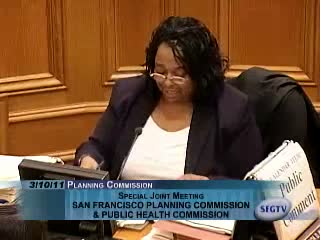
Mixed public reaction at joint Planning and Health commissions as CPMC outlines multi‑campus rebuild
Summary
At a March 10 joint hearing, California Pacific Medical Center (CPMC) presented its long‑range rebuild plan emphasizing seismic safety and service consolidation. Testimony split: community groups demanded enforceable charity‑care and Medi‑Cal commitments for Tenderloin residents; clinicians and community partners backed the rebuild for safety and continuity.
California Pacific Medical Center told a joint meeting of the San Francisco Planning Commission and Health Commission on March 10 that its long‑range rebuild is intended to meet state seismic standards and modernize care across four campuses, but community members pressed the hospital for stronger, enforceable commitments on charity care and access for low‑income neighborhoods.
Elizabeth Waddy of the Planning Department opened the session and framed the series of informational hearings, saying tonight would focus on CPMC's health‑care delivery plan and that architecture and urban form will be addressed at the April 21 hearing. Barbara Garcia, director of the Department of Public Health, told the commissions the health department had passed two resolutions providing a framework for the department’s position and that a report describing how CPMC has addressed health commission recommendations will be released to commissioners next week.
Warren Browner, chief executive officer of California Pacific Medical Center, outlined the hospital’s rationale for concentrating specialty services. He emphasized seismic requirements under state law (Senate Bill 1953) and presented a timetable to bring facilities up to the SPC‑5 standard, saying the plan would allow CPMC to “remain operational in the event of a major earthquake.” Browner also cited commitments he said the system has made to the city: retaining roughly 6,200 jobs, increasing dollar amounts of charity care since 2008, and preserving skilled‑nursing capacity (noting 38 SNF beds to remain at the Davies campus and a pledge to identify or build roughly 62 additional beds elsewhere to total about 100 SNF beds). He said Sutter Health’s board had committed $250 million toward rebuilding the St. Luke’s campus.
Community testimony that followed divided largely along two lines. Opponents, organized in groups such as the Good Neighbor Coalition and the Coalition for Health Planning, told commissioners CPMC has a poor record serving low‑income patients and argued the proposed Cathedral Hill hospital and system consolidation risk further marginalizing Tenderloin residents. Brad Paul, a community negotiator for the Good Neighbor Coalition, said meetings convened by the city’s Office of Economic and Workforce Development had stalled and that his group was urging the mayor to take a harder line in negotiations.
Speakers citing data from CPMC documents and public reports alleged that fewer than 10 percent of CPMC’s patients at its main campuses were Medi‑Cal recipients in 2009 and that charity care represented less than 1 percent of revenue in the same period. "Less than 1% of CPMC's revenue in 2009 was given back in charity care," a Good Neighbor Coalition speaker stated, urging the commissions not to proceed without a binding community benefits agreement.
Clinicians, nurses, hospital employees and several community health organizations, however, urged the commissions to move forward. Physicians and St. Luke’s staff described clinical and operational reasons to consolidate specialty services — particularly for intensive maternal‑neonatal and complex surgical care — and detailed patient stories and partnerships in which CPMC provides services, grants and clinic support. Dr. Kenneth Tai, medical director of Northeast Medical Services, said his nonprofit clinic refers many Medi‑Cal patients to CPMC and described donations and in‑kind services CPMC has provided. Several speakers who co‑chaired or participated in the Blue Ribbon panel said CPMC had revised plans in line with the panel’s recommendations.
Commissioners pressed for more detail and enforceability. Several Planning Commissioners said the staff packet and the institutional master plan available at the hearing appeared out of date and requested an updated written report on how CPMC has met the health commission’s recommendations. Commissioners also asked for a draft development agreement — cited by health commissioners as the mechanism to secure long‑term, enforceable commitments on charity care, Medi‑Cal access, local hiring and other mitigations — and for clearer explanations of the hospital’s payer‑mix and distribution model across campuses.
Staff said the city would provide a finalized report early next week and that a draft development agreement would be presented for discussion in May, with entitlements and EIR certification targeted in June. No formal votes on entitlements were taken at the hearing. The commissions recessed after scheduling further hearings on April 21 (architecture/urban form) and May 12 (development agreement), and asked stakeholders to continue negotiating with the mayor’s office and city staff.
What happens next: The planning commission is scheduled to continue informational hearings on April 21 and May 12, when staff expects to present a draft development agreement; the commission also discussed targeting entitlements in June. The Health Department said it will release a report documenting CPMC’s responses to the health commission’s recommendations.
Sources: remarks and testimony presented to the San Francisco Planning Commission and Health Commission during the joint hearing on March 10, 2011; statements by Warren Browner (CPMC CEO), Barbara Garcia (Director of Public Health), Elizabeth Waddy (Planning Department), community representatives and clinicians.