Get Full Government Meeting Transcripts, Videos, & Alerts Forever!
Get email alerts on the Signs Enforcement topic
No spam. Unsubscribe anytime.
Planning Department says sign program finished inventory, posts public map as enforcement continues
Summary
Planning Department staff told the Planning Commission Feb. 24 that the General Advertising Sign Program has completed a citywide inventory, issued 681 notices of violation and led to removal of about 588 signs; staff unveiled an interactive public map and said enforcement and litigation continue while the program shifts to monitoring.
The San Francisco Planning Department told the Planning Commission on Feb. 24 that it has completed a multi-year review of the city's general advertising signs and is publishing more detailed information about the signs online.
"We have finished the review of each of the 1,672 general advertising signs in San Francisco," Dan Sider, planning department staff, said during an informational presentation. He told commissioners the department has issued 681 notices of violation, taken enforcement actions that resulted in removal of about 588 signs and resolved most appeals and litigation to date.
Sider said the department assembled an exhaustive database of locations, permits and photographs and that a recent settlement allowed the agency to disclose more detailed inventory information. He demonstrated an interactive Google-based map of general advertising signs at signmap.sfplanning.org and described it as a beta version the department will refine.
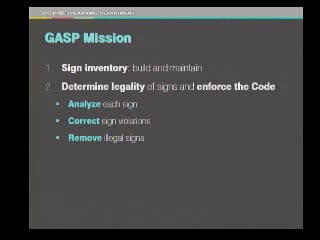
The presentation outlined the program's enforcement process: staff inspect physical characteristics, verify permits, and issue a notice of violation that gives sign owners 30 days to abate or file a request for reconsideration, which is heard before an administrative law judge. Sider gave a penalty example: an unauthorized sign larger than 500 square feet can accrue a daily penalty of $2,500.
Sider also summarized the program's legal record: of 29 appeals cited, the department prevailed or matters were resolved without a hearing in 28; one NOV was overturned. He said the program has resolved nine litigation matters with four outstanding.
On finances, Sider said annual income and expenses are each about $550,000. Revenue comes partly from annual sign fees and largely from penalties; he said roughly $7 million in penalty claims are currently in court and the department has collected about $600,000 in cash to date. Legal costs, he said, run roughly a quarter-million dollars.
Looking ahead, Sider said the program has completed its intensive inventory phase and will move into a monitoring phase. "The program will be staffed by a single full-time equivalent moving forward," he said, and the unit will be folded into the department's broader code-enforcement efforts while keeping the inventory as a tool to respond to new complaints.
Public commenters praised the staff's work. Peter Fortune of the nonprofit San Francisco Beautiful thanked the department and recounted deposition testimony from earlier litigation involving Clear Channel that, he said, documented previously tolerated illegal signs. "That attitude is no longer," Fortune said.
Commissioners asked staff how new illegal signs are found and whether certain storefront or sidewalk signs fall under this program. Christine LaMorena, enforcement planner, said most new-sign complaints come via email or phone from the public and from field visits; she said sidewalk sandwich boards and many window signs are typically regulated by Public Works or the police code rather than the General Advertising Sign Program because those signs sit on sidewalks or are subject to different jurisdictional rules.
Sider emphasized that although the inventory phase is complete, enforcement will continue against newly appearing illegal signs and that the map and database will support ongoing monitoring.
The commission received the informational presentation and moved on to the next item on its calendar.