Get Full Government Meeting Transcripts, Videos, & Alerts Forever!
Get email alerts on the Development Agreement topic
No spam. Unsubscribe anytime.
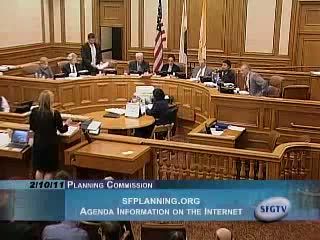
Planning Commission forwards Park Merced entitlements and development agreement to supervisors after 4–3 approval
Summary
After certifying the EIR, the commission voted 4–3 to recommend adoption of CEQA findings and to forward planning‑code, zoning, general‑plan amendments and a development agreement for Park Merced to the Board of Supervisors; the decision triggers additional agency review (SFMTA, SFPUC) and continued negotiation on tenant‑protection language.
Following certification of the FEIR, the San Francisco Planning Commission considered the full package of implementation actions for the Park Merced Mixed‑Use Development Program — CEQA findings, planning code and zoning map amendments, a general‑plan amendment, a local coastal permit and a development agreement — and voted to recommend approval by a 4–3 roll call.
Planning staff described the package (SEG 2464–2472): the program would cover roughly 152 acres, add about 5,679 net new residential units and reconfigure about 68 acres of open space, with project‑funded transportation improvements including a realignment of the M‑Ocean View line and intersection improvements adjacent to Park Merced. Staff and the sponsor (Michael Yarny, OEWD) stressed the DA’s tenant protections: existing rent‑controlled units would be preserved in quantity (3,221 units remain subject to rent protections) and the DA requires that no existing unit be demolished until a replacement unit is ready for immediate occupancy and assignment to existing tenants with the same bedroom/bath count and rent controls in place.
Speakers for and against the package addressed a wide range of topics. Supporters, including labor representatives and housing advocates, said the project yields substantial private funding for transit, parks and affordable housing (the sponsor pledged a mix of on‑site below‑market units and in‑lieu fees). “This project represents by far the largest investment in replacement housing and housing affordability ever seen on the West Side,” Tim Cohen of the Housing Action Coalition said.
Opponents pressed for more enforceable guarantees, flagged health and air‑quality concerns during long demolition and construction periods, and recommended stronger mitigation or preservation alternatives for historic landscape elements. Tenant advocates asked for more detailed and enforceable temporary relocation measures for residents who may be affected by long construction phasing.
Commission discussion revisited core issues: DA enforceability and transfer protections, whether mitigation measures required by CEQA need a nexus showing if imposed outside of a negotiated DA, phasing (minimum 500 units and maximum 2,500 units per phase), and non‑city agency approvals (SFMTA, SFPUC, California Coastal Commission). City attorneys explained that while CEQA nexus rules govern regulatory conditions imposed as standard conditions, a development agreement is a negotiated contract and can include provisions the parties agree to without separate nexus findings; however, the DA remains subject to later review and may not contractually override state law.
On final roll call, Commissioners Antonini, Borden and Fong joined Commissioner Miguel to approve the package; Commissioners Moore, Seguaya and Olague opposed. The Planning Commission’s approval forwards the DA, code amendments and supporting documents to SFMTA, SFPUC and the Board of Supervisors for subsequent approvals and any additional changes. Staff and the sponsor said they will continue discussions with the Rent Board staff and other agencies to refine language on tenant notices, phasing and enforcement before the Board of Supervisors’ hearings.
Next steps include public development‑phase applications (each with public presentation requirements for affected tenants), design‑review and permits for individual buildings and infrastructure, and separate agency votes on transit and coastal elements. The developer, the city and other agencies will retain obligations and enforcement remedies spelled out in the DA if it is ultimately approved by the Board of Supervisors.