Get Full Government Meeting Transcripts, Videos, & Alerts Forever!
Get email alerts on the Market Octavia Wholefoods topic
No spam. Unsubscribe anytime.
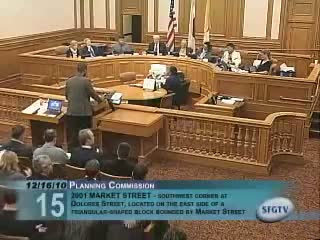
Planning commission approves 2001 Market Street project with conditions; neighbors pressed Whole Foods over size, loading and queuing
Summary
The commission approved the Prado Group/Whole Foods plan for 2001 Market Street after extended public comment. Conditions include a queue‑management toolkit, strengthened queuing language, and a one‑year follow‑up on loading/queuing impacts. The project will provide a mix of housing and retail and includes an inclusionary housing commitment.
The Planning Commission voted to approve the Prado Group’s mixed‑use project at 2001 Market Street — a proposal that includes a ground‑floor Whole Foods store, housing and below‑grade parking — after a lengthy public hearing and negotiated conditions intended to limit traffic, loading and neighborhood impacts.
Planning staff summarized outreach and technical reviews and presented an updated mitigation and monitoring program. Adam Smith of Whole Foods described the retailer’s on‑site operations and said the company expected most customers to arrive without cars: "We incentivize our team members to use alternative transportation and expect that most of our customers will as well," he said. Project sponsor Dan Saffir told commissioners the team had completed more than 60 neighborhood meetings and had revised designs in response to community input.
Neighbors and merchant groups split their testimony. Some neighborhood associations and nearby residents opposed the store’s 31,000‑square‑foot size and sought later delivery hours and stronger queuing restrictions. Merchants and several neighborhood organizations supported the project, saying it would activate a long‑vacant corner and create jobs. Commissioner motions added clearer queuing language to the mitigation toolbox, required monitoring, and added a report‑back hearing approximately one year after store occupancy to evaluate loading and queuing outcomes. Commissioners approved the project on that basis.
The developer’s inclusionary housing approach drew repeated questions: staff said the project would provide a minimum on‑site BMR (below‑market‑rate) commitment and that other options — off‑site units or in‑lieu fees — were included in the development agreement options. The mayor’s office of housing will be involved with site identification for any off‑site BMR commitment. The commission’s action preserves the city’s ability to require further performance and to require implementation of the mitigation measures listed in the final MMRP.