Get Full Government Meeting Transcripts, Videos, & Alerts Forever!
Get email alerts on the Fairmont Eir topic
No spam. Unsubscribe anytime.
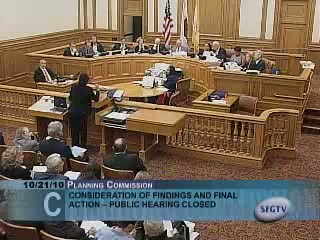
Planning Commission deadlocks on Fairmont Hotel EIR after hours of testimony; certification continued to Jan. 27
Summary
After hours of public testimony for and against the Fairmont Hotel revitalization and tower project, the Planning Commission split 3–3 on certification of the final EIR and did not certify. Commissioners asked staff for additional analysis on several points and continued the certification hearing to Jan. 27, 2011.
The Planning Commission took testimony from scores of neighbors, preservation groups, union representatives and business organizations over the final environmental impact report (EIR) for the Fairmont Hotel revitalization and proposed residential tower at 950 Mason Street. Speakers were sharply divided: preservation and neighborhood groups said the EIR omits reasonable alternatives and understates construction, traffic, loading and historic‑resource impacts; supporters including some neighborhood associations and property managers said the EIR is comprehensive and the project is needed to keep the landmark hotel economically viable.
Context and staff position: Devyani Jain of the Planning Department summarized the EIR process — notice of preparation, a draft EIR issued April 28, 2010, and public comments addressed in a comments-and-responses document — and said the EIR identified a range of mitigable impacts and one significant unavoidable impact: demolition of the Tonga Room. Planning staff recommended certification for CEQA compliance and completeness, subject to mitigation and a mitigation monitoring and reporting program.
Key issues raised by the public included the adequacy of alternatives analysis, whether the EIR properly considered adaptive reuse of the existing tower, the degree and feasibility of the proposed mitigation for impacts on the Fairmont’s historic fabric, loading and trash handling on Sacramento Street, effects on cable-car operations and pedestrian circulation, construction noise and vibration, and employment impacts tied to conversion of hotel rooms to condominium units.
Staff clarification: Tim Frey, the department’s preservation technical specialist, said one mitigation item (MCP‑1A) requiring future design to meet Secretary of the Interior standards was removed after the project’s preservation consultant submitted additional documentation showing the exterior connectors would conform to those standards; he also noted the project remains subject to HPC review where applicable.
Vote and next steps: A motion to certify the final EIR failed on a 3–3 roll call (Ayes: Commissioners Antonini, Borden, Miguel; Noes: Commissioners Moore, Seguaya, Olague). Following discussion and direction to staff to provide additional technical analyses and a legal memo on scope, the commission voted to continue the certification hearing to January 27, 2011, and requested a staff memo detailing the scope and schedule for additional work to respond to the concerns raised at the hearing. Planning staff said the continuation will allow time to prepare and circulate additional information; commissioners reserved the option to bring the matter back sooner if staff completes the requested work earlier.