Get email alerts on the Neighborhoods And Culture topic
No spam. Unsubscribe anytime.
Board Rejects Rehearing Requests by Valencia Street Project Sponsor; Marsh Theatre and Neighbors Back Conditions
Summary
The Board of Appeals denied rehearing requests filed by the developer of 1050–1058 Valencia Street, after months of argument over top‑floor setbacks and protections for the Marsh Theatre. Dozens of residents and arts organizations urged the board to keep conditions limiting height and requiring theater protections; the board found no new material facts and denied rehearings 5–0.
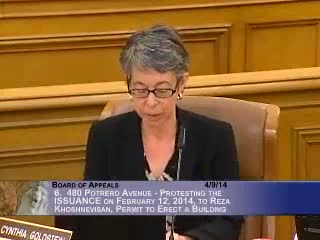
The San Francisco Board of Appeals on April 9 declined to grant rehearings sought by the project sponsor for the 1050–1058 Valencia Street condominium project, leaving in place conditions the board adopted earlier that aimed to protect neighborhood character and preserve the Marsh Theatre.
Project counsel and the architect argued the rehearing requests presented “new evidence” and that the board’s February conditions — which required top‑floor setbacks and other design changes — would render the project infeasible. Architect Stephen Antoneres told the board that cutting the fifth floor ten to twelve feet at the front and rear triggered extensive redesign and substantial cost increases.
Opposing the rehearing, the Marsh Theatre and neighborhood groups urged the board to uphold the February conditions. Mary Gallagher of the Marsh invoked a Latin phrase in her remarks — “Facta non verba” — to emphasize that neighborhood groups had asked for tangible changes to massing, not just promises. Supporters from Theater Bay Area and the Liberty Hill Neighborhood Association told the board the Marsh is a long‑standing venue for solo artists and should be protected from adjacent development that could create noise and operational conflicts.
Planning staff and the board noted the long procedural history: the project’s environmental review and discretionary approvals had been considered by the Planning Commission and Board of Supervisors, and some issues — notably CEQA concerns — had been litigated. Commissioners concluded that the sponsor had not shown new, material facts or manifest injustice sufficient to reopen the hearing. The board voted 5–0 to deny the rehearing requests.
What happens next: The board’s February conditions stand. Parties were allowed to pursue usual administrative remedies outside this rehearing request, and project sponsors may proceed only within the constraints set by the board.
AI generated
The text on this page is AI generated. Summaries, highlights, analysis, and video transcripts are all produced from the original source material.
AI can make mistakes, so if you spot one, and we will fix it for everyone.
Note: the source content is unaltered by us. Any content source we link to, be it a video, an audio recording, or a document, is presented exactly as its publisher released it. That publisher is usually a government body, sometimes an individual official or another organisation.