Get Full Government Meeting Transcripts, Videos, & Alerts Forever!
Get email alerts on the Transportation topic
No spam. Unsubscribe anytime.
Planning Commission backs code changes to encourage car sharing, allows voluntary commercial conversions
Summary
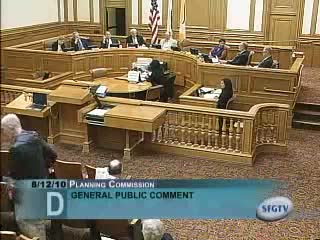
The San Francisco Planning Commission voted unanimously Aug. 12 to recommend planning-code amendments that codify car‑share zoning rules and, by amendment, permit commercial parking spaces to be voluntarily converted to car‑share spaces.
The San Francisco Planning Commission voted unanimously Aug. 12 to recommend a package of planning-code amendments that would codify recently adopted car‑sharing rules and add two commission-requested changes, including language encouraging car‑share services in transportation-management programs.
Planning Department staff said the ordinance packages five changes, three to put zoning-administrator bulletin clarifications into the code and two added at the commission’s request: promoting car sharing as an option in transportation‑management programs and enabling the commission to require car‑share memberships for future residents of projects seeking to exceed permitted parking. Anne Marie Rogerskin of the Planning Department summarized the history of the policy and the rationale for the five draft changes.
Tom Radulovich, a transportation advocate, told commissioners he supported car sharing as a demand-management tool but urged caution about using car‑share memberships as a substitute for established parking maximums. “Car sharing is a great tool,” Radulovich said, while asking the commission not to make membership a way to exceed parking maximums. He proposed allowing voluntary conversion of both residential and commercial required parking to car-share spaces, and suggested any mitigation for excess parking be directed to transit, walking and bicycling improvements rather than car‑share offsets.
Commissioners discussed scope and application: staff confirmed the residential conversion provision was written for residential units, with the department open to allowing voluntary commercial conversions. Kevin Guy, planning staff, said the code currently requires car‑share spaces in newly constructed residential buildings that provide parking, and that provisions under consideration would extend flexibility while preserving the policy intent that parking requirements manage demand and congestion.
After discussion, Commissioner Bridal moved to approve the ordinance with an amendment explicitly allowing project sponsors to voluntarily convert required commercial parking to car‑share spaces; Commissioner Antonini seconded. The motion passed unanimously. Planning staff said the commission’s recommendation will be forwarded to the Board of Supervisors for consideration.