Get Full Government Meeting Transcripts, Videos, & Alerts Forever!
Get email alerts on the Discretionary Review topic
No spam. Unsubscribe anytime.
Planning staff proposes streamlined interim procedures for discretionary review hearings
Summary
City planning staff proposed modest procedural changes to how discretionary review (DR) cases are staffed and presented — not changes to public speaking time — arguing stronger pre‑application work lets the department shorten later staff reports. Public advocates urged deeper data, community meetings and caution before changing access to the commission.
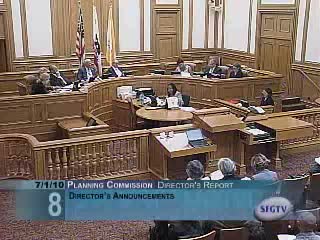
Planning Department staff brought a proposal to the San Francisco Planning Commission on July 1 to adjust internal procedures for discretionary review (DR) cases, emphasizing modest changes to staff analysis and hearing staffing while preserving public speaking time.
The department’s memo, presented by Kelly Ambu and Liz Waddy, said more resources have been devoted to pre‑application work and residential design team review. Because early outreach and design input have increased, staff argued it can reduce analysis in certain DR case reports and use abbreviated staffing for projects that meet narrow criteria while preserving the commission’s ability to elevate any case to a full DR for fuller review.
Community speakers pushed back. Eric Brooks of the San Francisco Green Party and others said staff needs to quantify workloads and show data on how many DR filings are “frivolous,” how much staff time DRs consume, and how tiered procedures would affect neighbor participation. Penelope Clark and neighborhood coalition representatives urged clear criteria for “tier 1” fast‑track cases, limits on continuances, and an ability for planning commissioners to move items to a fuller hearing.
Commissioners generally favored experimentation with interim procedures but insisted on safeguards. Several members said they supported retaining an easy option to bring any abbreviated case back for full analysis and that any procedures must be reversible if problems appear. Commissioner discussion focused on retaining public access, ensuring commissioners can request full analysis, and making the elevation rule consistent regardless of how many commissioners attend.
The commission did not take a final legislative action on the proposal July 1. Commissioners asked staff to return with clarified language, examples of cases that would qualify for abbreviated handling, and more detailed descriptions of the thresholds and the elevation process.
The department said it will continue to use full DR analysis where projects raise substantive neighborhood design or land‑use questions and that the initial changes are intended to preserve public participation while saving staff time on cases suitable for a lighter staff report.