Get Full Government Meeting Transcripts, Videos, & Alerts Forever!
Get email alerts on the Public Health Wireless topic
No spam. Unsubscribe anytime.
Health department says city monitoring keeps cellphone-antenna emissions far below federal limits; residents ask for task force
Summary
San Francisco Department of Public Health told the Planning Commission that radiofrequency emissions from cellular antennas meet FCC limits and city monitoring shows ground'level exposure generally at about 1% (up to 10%) of that threshold; residents urged a task force to study cumulative and child exposure.
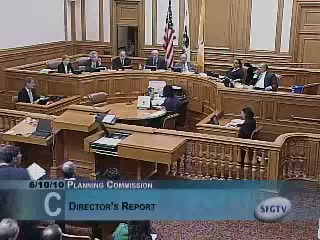
San Francisco's Department of Public Health told the Planning Commission on June 10 that the city's review and monitoring program keeps radiofrequency (RF) emissions from cellular antennas well within federal safety limits.
Director of Environmental Health Rajeev Bhatia summarized decades of scientific study and the local controls that apply to base stations, saying RF radiation is non'ionizing and that established harms are thermal effects at high exposures. He said federal exposure standards — enforced by the Federal Communications Commission — set anchors that the city uses; San Francisco requires third'party RF reports before installation, post'installation readings, and two'year rechecks to confirm compliance. Ground'level ambient measurements in the city typically register near 1% of the FCC public exposure limit and at most about 10% in the highest measured spots, Bhatia said, adding that indoor attenuation further reduces exposure.
Why it matters: Residents said they were reassured to learn the city measures ambient levels and requires verification, but several public commenters said the scientific record is not settled. Jocelyn Colopy and others asked the commission to form a task force to review newer and cumulative-exposure studies, especially for children and near schools.
What was said: Bhatia said there is no consistent evidence of nonthermal carcinogenic effects at levels people encounter today and that most personal exposure derives from handheld devices rather than rooftop antennas. He described the city's process for reviewing proposals and conducting post'installation testing by independent engineers, and he said occupants within 25 feet of an installation can request an in'home measurement.
Responses and next steps: Commissioners pressed staff on whether other jurisdictions restrict antenna placement near schools; staff said they would research comparable urban policies. Several commissioners asked the department to return with materials comparing dense, urban regulations and appeals history; staff committed to a memo with additional jurisdictional comparisons and to cataloguing appeals that were successful at the Board of Supervisors.
The hearing: The presentation was informational; no regulatory change was decided. The commission kept the record open for related agenda business and encouraged additional outreach and comparative research.