Get Full Government Meeting Transcripts, Videos, & Alerts Forever!
Get email alerts on the Variance 225 Clipper topic
No spam. Unsubscribe anytime.
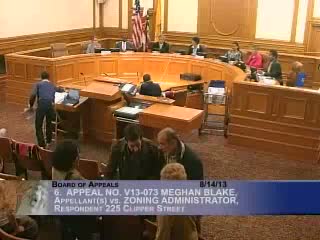
Board upholds denial of front-setback parking variance at 225 Clipper Street
Summary
Homeowner’s appeal to allow a parking pad or garage in the front setback at 225 Clipper Street was denied after Planning staff said the proposal failed the five variance findings, produced a substandard space and risked sidewalk encroachment; the board upheld the zoning administrator’s denial 5–0.
The Board of Appeals on Aug. 14 upheld the Planning Department’s denial of a variance to permit an off-street parking space in the front setback at 225 Clipper Street.
Architect Ian Murray, representing homeowner Megan Blake, presented two alternatives: an interior garage retrofit under the bay/window area or a surface parking pad in the front setback that would preserve the existing stair and most of the facade. The applicant argued the neighborhood already included numerous front setbacks with informal driveways and that practical hardship and safety concerns (unloading children, groceries) justified relief.
Planning staff recommended denial under the five statutory variance findings, concluding that exceptional circumstances were not demonstrated, that the proposed parking pad would be a substandard space (too short for most modern cars such as a Toyota Prius), and that approving the variance could privatize a public on-street parking space and encourage sidewalk encroachment. Staff said code-compliant alternatives — including a properly designed garage — could be pursued but had not been fully vetted.
Commissioners expressed sympathy for the homeowner’s parking difficulties but said they could not support granting a variance that would create a substandard and potentially unsafe condition or legalize the erosion of the public right-of-way. The board voted 5–0 to uphold the zoning administrator’s denial.
Next steps: The denial is final per the board’s action; the homeowner may explore alternate code-compliant designs or other administrative remedies.