Get Full Government Meeting Transcripts, Videos, & Alerts Forever!
Get email alerts on the Building Permit Jurisdiction topic
No spam. Unsubscribe anytime.
Appeals board refuses neighbor’s jurisdiction request over Chestnut Street addition
Summary
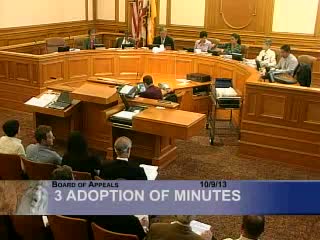
The San Francisco Board of Appeals on Oct. 9 denied a jurisdiction request by neighbor Zach Rogers seeking to suspend the permit for a vertical addition at 2652 Chestnut Street, finding the permit remains code‑compliant despite a drafting error in adjacent-property representation.
Zach Rogers, a neighbor at 2646 Chestnut Street, told the Board of Appeals he asked the board to take jurisdiction over Building Permit 200906059880S because the project at 2652 Chestnut is now ‘‘over 6 feet higher’’ than what was depicted during neighborhood notification and that the change has materially affected light, air and privacy at his home.
The permit holder, Ronald Sires, and his architect said the underlying issue was a drafting error in which the elevation of an adjacent building was mis‑depicted; they said the work was built according to the approved plans and that a revision permit had been filed and approved after the error was discovered. Planning Department zoning administrator Scott Sanchez explained that inaccuracies in adjacent‑building depictions do occur because surveys of adjacent buildings are not required, and that department staff concluded the project remained code‑compliant and did not require a new Section 3.11 neighborhood notice.
Commissioners questioned how much construction had been completed and the costs incurred. Contractor and permit representatives acknowledged the top level and framing are in place and estimated the popup portion was roughly 60–70 percent complete; one architect estimated the completed value attributable to the pop‑up at about $600,000 while the permit holder said he did not have precise cost figures available. Inspector Joe Duffy said field measurements show the structure is being built to the approved plans.
After deliberation about notice, the residential design guidelines and reliance by the permit holder on construction progress, the board voted to deny the jurisdiction request. Commissioner Tada moved to deny the request; the roll call showed a 5–0 vote denying jurisdiction and making clear no appeal may be filed against the permit (vote recorded Oct. 9). The board’s denial means the underlying permit stands and the board did not take the matter on the merits.
What happens next: With jurisdiction denied, the permit remains in force. Neighbors who disagree about construction impacts may pursue other remedies available under building, planning or civil codes, but the board’s ruling removes the board of appeals as the vehicle for halting the permit on the basis argued by Rogers.