Get Full Government Meeting Transcripts, Videos, & Alerts Forever!
Get email alerts on the Administrative Procedure topic
No spam. Unsubscribe anytime.
Board Denies Westfield’s Request to Reopen Appeal of Kettle Corn Permit, Citing Notice and Equity Questions
Summary
After extensive testimony from Westfield LLC, the Kettle Corn Star permit holder, and DPW staff, the Board of Appeals denied Westfield’s jurisdiction request over a mobile food permit 4–1, concluding notice and equities favored leaving the permit in place.
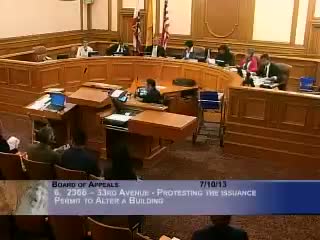
The San Francisco Board of Appeals considered a jurisdiction request from Westfield LLC concerning a mobile‑food permit issued to vendor Kettle Corn Star in front of the Westfield San Francisco Center at 865 Market Street.
Mary Murphy, counsel for Westfield, said Westfield did not receive the requisite mailed notice of the original permit and that the omission denied the company due process; she asked the board to accept jurisdiction under the board’s rule allowing review in “extraordinary cases” when the city’s notice procedures caused a late filing. Nicole Dubey (Westfield) described the mall’s mailbox arrangement at 865 Market (Box A) and said Westfield first noticed the cart operating in the summer of 2012.
Jack Winn, agent for Kettle Corn Star, told the board the permit holder followed DPW procedures, that Radius Services and DPW mailed notices to hundreds of addresses and that only three written objections were filed previously. John Kwong of the Department of Public Works acknowledged that Westfield’s Box A address did not appear on the mailing list but said DPW had mailed a distribution and also provided newspaper notice; DPW staff described internal review and the program’s approval process.
Commissioners debated whether the code required notice to Westfield as a property owner for a daytime permit (the board heard that daytime permits trigger business-notice procedures while nighttime permits include property-owner notice), whether the mailing service’s records were dispositive and whether constructive notice (the vendor operating visibly in front of the center) weighed against reopening the matter. One commissioner found no manifest injustice; another expressed the opposite view, noting ambiguity in how “business” is defined for mail lists.
On a motion to deny Westfield’s jurisdiction request, the board voted 4–1 to deny the request, barring an appeal on that permit. The record shows the jurisdiction request raised procedural questions about DPW’s distribution lists and how the city informs large property owners and tenants about mobile‑food permits.
Why it matters: The decision leaves Kettle Corn Star’s permit in place and highlights gaps and ambiguities in how DPW and third‑party mailing services identify and notify affected businesses and property owners.