Get Full Government Meeting Transcripts, Videos, & Alerts Forever!
Get email alerts on the Childcare In Kind topic
No spam. Unsubscribe anytime.
Planning commission approves in‑kind impact‑fee waiver to build Third Street child care center
Summary
The Planning Commission authorized developers to substitute construction of a 6,260‑sq ft child care facility on Third Street for nearly $1.9 million in Eastern Neighborhoods impact fees, with conditions to prioritize low‑income slots and operator selection; commissioners debated affordability targets and monitoring safeguards before approving the waiver.
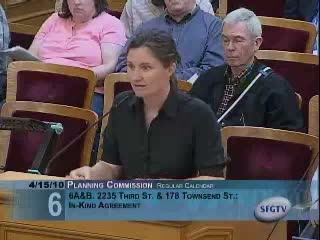
The San Francisco Planning Commission on April 15 approved an in‑kind impact‑fee waiver allowing developer credits from two nearby projects to fund a 6,260‑square‑foot child care facility on the ground floor at 2235 Third Street.
Planning Department staff described the proposal as an in‑kind agreement under the Eastern Neighborhoods Impact Fee program that would deliver the finished child care space, including toilets, kitchens and five classrooms, and guarantee operator access rent‑free for 55 years. Kirsten Lissinger of the Planning Department said staff valued the build‑out at about $3.06 per square foot and estimated the facility’s total capital value at roughly $1,915,560, with the Third Street project carrying a nearly $300,000 fee balance to be paid at permit.
Marti Lucic, citywide child care administrator at the Department of Children, Youth and Their Families (DCYF), told commissioners the city faces an acute shortage of licensed care and estimated the new facility could serve about 44 to 50 children depending on the operator. “The need to expand the supply of child care could not be more pressing today,” Lucic said, describing the project as a chance to develop a “high‑quality, viable and sustainable” center that mixes subsidized and market‑rate slots.
The two developments that would provide the credits — the Third Street and 178 Townsend projects sponsored by the Martin Building Company — together would offset the impact fees that otherwise would be paid into the Eastern Neighborhoods fund. Patrick McNerney, speaking for the project sponsor, said the developer has long intended an on‑site child care amenity and that combining fees from two projects produces the critical mass needed for a substantial facility.
Community comment was mixed. Angelo Cabandi of the South of Market Community Action Network urged the commission to reject allowing developers to pick community benefits without broader neighborhood input, calling the outreach “insufficient.” Fernando Marti, a member of the Eastern Neighborhoods Citizens Advisory Committee and a father, urged stronger affordability requirements and asked that infant and toddler slots and hours be specified in the RFP.
Commissioners and staff debated how to balance deeper affordability against the need to attract an operator able to run the center without long‑term operating subsidies. The in‑kind agreement as drafted requires an operator to provide 10% of slots without any subsidy (a baseline the department said is intended to avoid excluding bidders) and scores proposals higher if they bring additional subsidies or more low‑income slots. Commissioners proposed a higher RFP target — a 25% affiliative threshold made up of 10% unsubsidized slots plus another 15% supported by public subsidies where available — with language allowing staff to drop back to the 10% baseline if no qualified proposals meet 25%.
Commissioner Moore moved to authorize the waiver and adopt the in‑kind agreements as presented, with staff directed to encourage higher affordability in the RFP and to include monitoring and fallback language. The motion passed after roll‑call votes. Opponents urged continued oversight and called for a formal commission policy on in‑kind agreements; staff said such a policy is under development and will be returned to the commission for consideration.
Next steps: the commission’s authorization allows execution of the in‑kind agreements and directs staff and DCYF to structure the operator RFP with the clarified affordability targets, competitive scoring to favor deeper subsidy and monitoring tools to ensure delivery of the facility and its program requirements.