Get Full Government Meeting Transcripts, Videos, & Alerts Forever!
Get email alerts on the Housing Rehabilitation topic
No spam. Unsubscribe anytime.
Planning Commission approves laundry and maintenance buildings for Martin Luther King–Marcus Garvey cooperatives after heated public testimony
Summary
After hours of testimony from shareholders and community members about board legitimacy, transparency and relocation, the Planning Commission approved conditional use authorizations for new laundry and maintenance structures at the Martin Luther King and Marcus Garvey cooperatives by a 5–1 vote.
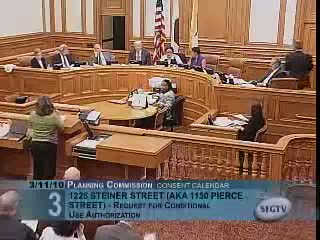
The San Francisco Planning Commission on March 11 approved conditional use authorizations to allow new laundry and maintenance buildings at the Martin Luther King and Marcus Garvey cooperative developments, part of a larger rehabilitation intended to preserve the projects as affordable cooperatives.
The commission voted 5–1 to approve items 3 and 4 after a long public hearing in which opponents and supporters of the rehabilitation clashed over board legitimacy, community outreach and relocation. Commissioner Catherine Moore cast the decisive vote in favor; Commissioner Christina Olague voted against.
Redevelopment agency and project staff told the commission the work is part of a comprehensive recapitalization intended to remedy deferred maintenance and to keep the buildings in cooperative ownership. Olson Li, Deputy Executive Director of the Redevelopment Agency, said the agency supported the plan and would provide financial assistance. Michelle Davis, the agency project manager, described the request as one element of a multi‑million‑dollar rehabilitation and said, "Upon completion of the $40,000,000 rehab, future generations at King Garvey have the benefit of affordable housing for at least 45 years." The department recommended approval of the conditional use requests for small, one‑story laundry structures and associated maintenance facilities.
Opponents, including Daniel Landry speaking for a newly formed King Garvey Shareholders Association, criticized the process and the current board of directors. Landry urged the commission to withhold approval until shareholders had access to development agreements and relocation plans and said, among other claims, that financing estimates had shifted during the process. He used an allotted 15‑minute public‑comment block to highlight allegations of inadequate notice and lack of transparency.
Board and developer representatives—including Kimberly McKay of Related Companies and the project architect—said the project team had held multiple meetings, provided translation services for Korean‑speaking residents, and worked with tenant advocates and HUD. Related Companies and redevelopment staff described relocation as temporary (typically 30–40 days per building during phased work), with most tenants guaranteed a return and Section 8 subsidies preserved for eligible shareholders. Redevelopment staff said the agency had provided a $5 million loan to advance predevelopment work.
Commissioners questioned outreach to non‑English speakers, the details of temporary relocation and whether rehabilitation would change long‑term affordability. Staff and agency representatives repeatedly told the panel that Section 8 project‑based subsidies would continue to support affordability and that most current shareholders would not see increased monthly rent as a result of the recapitalization.
The commission’s approval authorizes the laundry and maintenance buildings as described in the staff report; conditions and standard permit requirements will apply. The redevelopment agency and project team told commissioners they would continue outreach and implement relocation planning as work phases proceed. The commission asked staff to consider a periodic informational report on the project’s first phase so the commission can track outreach, relocation and implementation.