Get Full Government Meeting Transcripts, Videos, & Alerts Forever!
Get email alerts on the Public Health Tobacco topic
No spam. Unsubscribe anytime.
San Francisco health officials review tobacco retail enforcement as board hears educational briefing
Summary
City public-health staff told the Board of Appeals that San Francisco—s tobacco retail-permit program helped reduce illegal sales to minors but that the city still measures about 12.8% illegal sales and aims to reach the state average of 8.7%. The presentation explained inspections, penalties and suspension authority and answered commissioners— technical questions about sampling and enforcement.
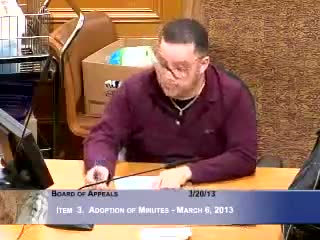
Derek Smith, a health-educator with the San Francisco Department of Public Health—s Tobacco Free Project, told the Board of Appeals on March 20 that tobacco remains the "number 1 cause of preventable death on Earth" and described the city—s work to reduce tobacco sales to minors. Smith said San Francisco—s retailer-inspection program and a 2003 Tobacco Retail Permit Ordinance have cut illegal sales but that the city—s current measured rate (about 12.8 percent) is above the statewide average of 8.7 percent.
Smith said the department and police run randomized decoy inspections of roughly 450 stores every 18 months and that a police-observed sale to a 15- or 16-year-old typically results in a Penal Code section 308 citation and referral to the health director for disciplinary action. "The authority ... is to suspend the tobacco sales permit," Smith said, adding that a first violation can lead to a suspension of up to 90 days under the ordinance.
In response to commissioner questions, Smith described the program—s random-sample design (a roughly 450-store sample drawn across supervisorial and police substation districts), the use of 15- and 16-year-old decoys and efforts to reach retailers in multiple languages. He said San Francisco continues annual multilingual mailings to the roughly 1,100 tobacco retailers and emphasized education plus enforcement as complementary tools.
Planning and building staff present said the board—s role in the briefing was to be informed rather than to decide policy. Smith told the board the department welcomes questions and that consistent application of the ordinance and enforcement practices contributes to sustained reductions in youth tobacco access.
The presentation concluded with commissioners asking about suspension-length effectiveness and how the department accounts for language barriers. Smith said suspensions tend to be a stronger deterrent than fines but that enforcement design varies by jurisdiction and that the department provides outreach materials in Arabic, Chinese, Spanish and English.