Get Full Government Meeting Transcripts, Videos, & Alerts Forever!
Get email alerts on the Green Development Agreement topic
No spam. Unsubscribe anytime.
Planning staff outlines Green Development Agreement to turn vacant downtown lots into interim "green" uses
Summary
City staff and design group Rebar presented a voluntary Green Development Agreement allowing developers to implement interim public-benefit uses on vacant sites in exchange for longer-term entitlement certainty; commissioners and public pressed for clarification on process, maintenance standards, CEQA treatment and duration of entitlements.
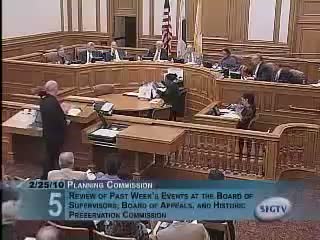
San Francisco planning staff on Feb. 25 outlined a proposal for Green Development Agreements (GreenDA) intended to encourage temporary "green" or interim uses on vacant development parcels while giving property owners added certainty about future entitlements.
Michael Yarny of the Office of Economic and Workforce Development told the Planning Commission the program aims to create short-term, high-quality interim uses that "beautify vacant lots" and provide neighborhood benefits with "minimum process, minimum delay, and with no money" from the city. "If we had a surplus or a special interim use parks fund, we would be having a different discussion today," Yarny said, stressing that the city was seeking regulatory tools rather than direct spending.
The presentation was followed by a design-focused review from Matthew Passmore of the art and design collective Rebar, who described public-benefit criteria for proposed interim projects. Rebar emphasized social, cultural and ecological yields such as urban agriculture, stormwater capture, public art and habitat creation as the types of public benefits that would justify a GreenDA.
Steve Cookland, representing Fifield (the developer of the prototype 399 Fremont site discussed at the hearing), described two candidate interim uses for that lot: a carbon-sequestration farm using fast-growing biomass and a street-tree nursery to supply local plant material. Cookland said the proposals address on-site contamination and drainage problems and would prioritize education and research goals.
Public commenters and several commissioners focused on process questions: whether GreenDA would bypass public hearings or standard extension procedures; how long an interim use could run; and who would be responsible for maintenance and liability. The public asked for overdue information staff has promised, including a report on lapsed entitlements. "CEQA must have an interpretation of what is a temporary use," said public commenter Sue Hester, and she asked whether "8 years is a temporary use." Yarny and staff replied that every GreenDA would be processed as an ordinance with an attached agreement and would come before the Planning Commission and Board of Supervisors for review and approval.
Commissioner Olague pressed whether the GreenDA would remove the commission—s hearing role on extensions; staff and Yarny said the intent is for the Planning Commission to retain authority to review and approve any agreement affecting entitlements. Commissioners also asked that staff clarify maintenance standards and minimum performance expectations so that vacant lots do not simply receive cosmetic cleanup.
Staff said draft legislation would be brought back to the commission and to the Board of Supervisors; Yarny indicated he would return with a more detailed ordinance and refined public-benefit criteria. The commission did not take action at the Feb. 25 meeting; staff and advocates said they would refine the draft and return with formal language, public-benefit scoring and a clearer process for environmental review and public notice.