Get Full Government Meeting Transcripts, Videos, & Alerts Forever!
Get email alerts on the Mobile Food Permit topic
No spam. Unsubscribe anytime.
Board continues Espresso Subito mobile food rehearing to March 20 after broad public debate on notice and competition
Summary
A rehearing on a mobile coffee-truck permit drew hours of testimony about notification procedures, the DPW's measurement methods (radius vs. walking distance) and 'like food' competition. After extensive public comment, the Board of Appeals continued the matter to March 20 to secure a full five-member vote.
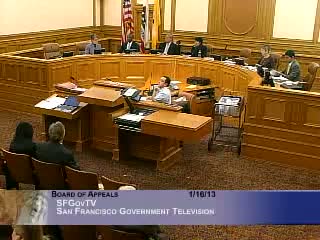
The Board of Appeals on Jan. 16 held a de novo rehearing for a contested mobile food permit for Espresso Subito (coffee truck), focusing on whether required notice was properly provided and how the Department of Public Works measures the 300‑foot limitation for 'like foods.'
Appellants representing Second Street merchants argued Radius Services (the notice vendor) and DPW misapplied the 300‑foot notification requirement, leaving multiple affected businesses unaware of the original permit hearing. They contended that the measurement should be a straight-line radius from the block face rather than the assessor's-block midpoint or a walking-distance method and emphasized 'like food' competitors within 300 feet. The appellants argued that Starbucks and other nearby vendors had objected and that several businesses were not notified.
DPW representatives (John Quang) and the permit holder (Gary Goldstein) defended the department’s practice of measuring walking distance from parking stalls or block midpoints per departmental orders and longstanding practice, said notification affidavits were prepared consistent with DPW guidelines, and noted the permit holder had relied on published DPW policy. Supporters of the permit (local customers and small-business advocates) said food trucks provide needed grab-and-go service in the Financial District.
More than 40 members of the public testified; arguments included accessibility of restrooms, sidewalk path-of-travel clearance, competitive saturation of coffee vendors, and the practical burdens on small businesses. After extended deliberation and recognition that a sitting commissioner (Arceli Hurtado) was absent and could affect the outcome, the board voted 4-0 to continue the rehearing to March 20 so a full five-member vote could be taken and any remaining questions be addressed without repeated re-noticing of the public speakers. The board instructed staff to ensure Commissioner Hurtado can view the hearing record prior to the March 20 meeting.