Get Full Government Meeting Transcripts, Videos, & Alerts Forever!
Planning commission backs fee‑consolidation and deferral package, and sends transfer‑fee option to supervisors
Summary
After hours of testimony and line‑by‑line questions, the Planning Commission voted to recommend two infrastructure‑fee measures that centralize fee collection and create a fee‑deferral option to the Board of Supervisors, and separately recommended an affordable‑housing transfer‑fee option that would replace a portion of upfront inclusionary fees with a 1% transfer fee. Supporters said the package could speed construction and jobs; opponents warned it delays neighborhood infrastructure and could weaken on‑site affordable housing.
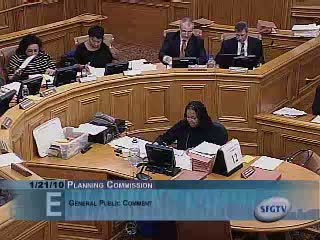
The San Francisco Planning Commission voted on Jan. 21 to send a multi‑part package of development fee reforms to the Board of Supervisors after a day of presentations and nearly four hours of public testimony on how the measures would affect affordable housing, neighborhood infrastructure and construction jobs.
The package before the commission contained three distinct elements: consolidation of development‑impact fee collection into a single unit at the Department of Building Inspection, a program to allow project sponsors to defer most impact fees until later construction milestones (with an added surcharge to capture the city’s opportunity cost), and a proposal to convert one‑third of certain inclusionary in‑lieu fees into a permanent 1% transfer fee recorded against title and dedicated to the city’s Affordable Housing Trust Fund.
Michael Yarny of the Office of Economic and Workforce Development, who led the presentation on the fee consolidation and the deferral program, described the measures as modest, targeted “margin” policies designed “to spur economic recovery sooner rather than later.” He told the commission the proposal would simplify fee collection, create a single project fee invoice for public review and establish three enforcement gates so that a project could not be occupied unless deferred fees or in‑kind commitments were satisfied.
Ted Egan of the Controller’s Office presented the fiscal modeling used to value the transfer‑fee concept and the deferral surcharge. Egan said the proposed blended surcharge was designed to make the City whole for the time value of money and construction inflation, and estimated that the combined measures would be modestly stimulative: “This fee deferral program alone would … lead to about 25 new housing units,” he said, summarizing the Controller’s conservative projection that the…
Already have an account? Log in
Subscribe to keep reading
Unlock the rest of this article — and every article on Citizen Portal.
- Unlimited articles
- AI-powered breakdowns of topics, speakers, decisions, and budgets
- Instant alerts when your location has a new meeting
- Follow topics and more locations
- 1,000 AI Insights / month, plus AI Chat