Get Full Government Meeting Transcripts, Videos, & Alerts Forever!
Get email alerts on the Development Fees topic
No spam. Unsubscribe anytime.
Planning commission backs fee‑consolidation and deferral package, and sends transfer‑fee option to supervisors
Summary
After hours of testimony and line‑by‑line questions, the Planning Commission voted to recommend two infrastructure‑fee measures that centralize fee collection and create a fee‑deferral option to the Board of Supervisors, and separately recommended an affordable‑housing transfer‑fee option that would replace a portion of upfront inclusionary fees with a 1% transfer fee. Supporters said the package could speed construction and jobs; opponents warned it delays neighborhood infrastructure and could weaken on‑site affordable housing.
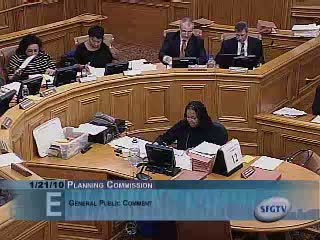
The San Francisco Planning Commission voted on Jan. 21 to send a multi‑part package of development fee reforms to the Board of Supervisors after a day of presentations and nearly four hours of public testimony on how the measures would affect affordable housing, neighborhood infrastructure and construction jobs.
The package before the commission contained three distinct elements: consolidation of development‑impact fee collection into a single unit at the Department of Building Inspection, a program to allow project sponsors to defer most impact fees until later construction milestones (with an added surcharge to capture the city’s opportunity cost), and a proposal to convert one‑third of certain inclusionary in‑lieu fees into a permanent 1% transfer fee recorded against title and dedicated to the city’s Affordable Housing Trust Fund.
Michael Yarny of the Office of Economic and Workforce Development, who led the presentation on the fee consolidation and the deferral program, described the measures as modest, targeted “margin” policies designed “to spur economic recovery sooner rather than later.” He told the commission the proposal would simplify fee collection, create a single project fee invoice for public review and establish three enforcement gates so that a project could not be occupied unless deferred fees or in‑kind commitments were satisfied.
Ted Egan of the Controller’s Office presented the fiscal modeling used to value the transfer‑fee concept and the deferral surcharge. Egan said the proposed blended surcharge was designed to make the City whole for the time value of money and construction inflation, and estimated that the combined measures would be modestly stimulative: “This fee deferral program alone would … lead to about 25 new housing units,” he said, summarizing the Controller’s conservative projection that the deferral could raise housing starts on the margin.
Craig Adelman of the Mayor’s Office of Housing said the transfer‑fee option would, in many modeled cases, generate equal or greater revenue for affordable‑housing finance in present‑value terms than the upfront in‑lieu fees it replaces. Adelman called the transfer fee “a diversification of the City’s sources of affordable‑housing funding,” noting that the City receives transfer transactions in good and bad market cycles and that the proposed revenue would be dedicated to the Affordable Housing Trust Fund.
Public testimony split along predictable lines. Building trade unions, contractors and real‑estate developers urged adoption, saying even modest shifts in fee timing or structure could unlock projects that are close to feasible and put construction workers back on the job: “We have to do whatever we can as city officials… to move these projects under construction,” the Chamber of Commerce told the commission. Community groups, eastern‑neighborhood advisory committees and affordable‑housing advocates warned that deferring neighborhood infrastructure fees could delay parks, streetscape and transit mitigation for years and that converting inclusionary funds into transfer fees risks reducing on‑site affordable production and lengthening the time to recoup the City’s revenue.
Commission debate focused on two core tradeoffs: the near‑term stimulus potential (jobs, construction starts, local sales and property tax benefits) versus the risk that delaying fee receipts would complicate capital planning and slow neighborhood infrastructure projects that depend on timely fee flows. Commissioners and staff pursued several compromise measures. The commission ultimately recommended the two infrastructure fee ordinances (fee consolidation and the deferral mechanism) — as amended by staff and by commission direction to include clearer annual reporting and a process to reassess the program — by a 4–3 vote. Later in the meeting the commission separately voted to recommend the transfer‑fee option (the proposal to take one‑third of inclusionary in‑lieu fees and replace that portion with a 1% transfer fee tied to title) to the Board of Supervisors; that vote passed 6–1.
What the commission sent forward
- Fee consolidation: creates a single development fee collection unit in DBI, publishes a citywide development fee register and requires a unified project fee invoice for every project. The collection unit would also consolidate technical appeals to a single venue (the Board of Appeals for calculation disputes) while preserving substantive appeals to the Board of Supervisors under existing law.
- Fee deferral program: allows project sponsors to defer certain impact fees until a later construction milestone (first substantial construction permit or first certificate of occupancy if they enroll in the program), subject to a blended surcharge that combines the Treasurer’s return and a construction cost inflator to approximate the City’s opportunity cost. The proposal includes enforcement gates to withhold final occupancy until fees or in‑kind obligations are certified.
- Affordable‑housing transfer fee: creates an option for developers to record a 1% transfer fee (a notice/restriction on title) in exchange for a 33% reduction of upfront in‑lieu inclusionary fees. The Controller’s modeling shows the City could be equal or better off, in net present value, under many scenarios because much of the transfer‑fee value is collected at early unit sales; opponents argued that the conversion shifts timing and risk in ways that could reduce on‑site affordable production.
What happens next
The Planning Commission forwarded the first two ordinances and the transfer‑fee option to the Board of Supervisors with the staff‑recommended amendments and commission‑requested study/reporting items (a formal review after a set period and improved coordination to explore short‑term seed financing options for neighborhood capital planning). The Board will consider the ordinances in the legislative process and may amend, add expiration dates or attach implementation conditions.
Commissioners, staff and members of the public asked the Board of Supervisors and mayoral staff to continue outreach and to return with clearer metrics for tracking who uses the programs and whether deferred fees affect timing of neighborhood projects. Planning staff said it will produce annual citywide fee reports under the new structure and that the transfer‑fee mechanism would be administered using a notice of restriction and a collection process designed to mirror how the City collects transfer tax.
Quotes
"So sooner rather than later is probably our mantra" — Michael Yarny, Office of Economic and Workforce Development, on the stimulus goal of the fee package.
"This fee deferral program alone would … lead to about 25 new housing units" — Ted Egan, Controller’s Office, summarizing the Controller’s conservative estimate of marginal housing starts under the deferral program.
"We think affordable housing in the big picture comes out ahead on this" — Craig Adelman, Mayor’s Office of Housing, on the transfer‑fee option.
Next steps
The Board of Supervisors will receive the commission’s recommendations and the revised draft ordinances. Staff said they will return budget and implementation reports and that the commission asked for a scheduled reexamination (an initial review period and public hearing) to assess program participation, fee cash‑flows and neighborhood impacts before any permanent continuation decision.