Get Full Government Meeting Transcripts, Videos, & Alerts Forever!
Get email alerts on the Taxi Medallions topic
No spam. Unsubscribe anytime.
Board of Appeals declines to take jurisdiction over SFMTA medallion resolution after hours of testimony
Summary
After hours of testimony from taxi drivers and presentations by United Taxicab Workers and SFMTA officials, the San Francisco Board of Appeals declined to invoke subject‑matter jurisdiction over SFMTA Resolution No. Twelve‑one15 (the 150–200 medallion action), leaving the MTA decision intact. The vote was 2–2; 3 votes would have been required to grant jurisdiction.
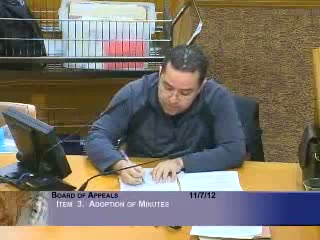
The San Francisco Board of Appeals on Nov. 7 heard more than two hours of testimony and legal argument before deciding not to invoke subject‑matter jurisdiction over a San Francisco Municipal Transportation Agency resolution that authorized issuance of 150–200 temporary medallions.
The dispute centered on whether the MTA’s resolution is a legislative policy decision immune from appeal or a grant of permits that the Board may review under Charter Section 4.106. Mark Gruberg, agent for the United Taxicab Workers, urged the board to take jurisdiction, arguing the resolution effectively grants permits and deprives drivers on the medallion waiting list of an avenue of appeal. “The only practical way to contest a decision of this nature is an appeal from the resolution itself,” Gruberg told the board.
SFMTA Director of Transportation Ed Ryskin said the action was a policy decision by the MTA board, tied to managing the city’s integrated transportation system and the charter’s ‘transit‑first’ policy. He described the permits at issue as a distinct, temporary class of three‑year license agreements with dispatch and accountability conditions. “This was a decision, by the MTA board, with regard to the criteria, for a set of permits,” Ryskin said.
Supervisor Scott Wiener, who spoke to the Board, urged deference to the MTA’s policy role and warned that accepting jurisdiction would invite repeated challenges to future MTA policy decisions.
Dozens of taxi drivers and industry representatives filled the public‑comment period, presenting the Board with a steady stream of personal testimony about long waits on the medallion list, lost retirement prospects, and a sense that medallions were being monetized rather than awarded to drivers. Speakers described seniority on a waiting list and the promised pathway to a medallion as central to drivers’ livelihoods.
Board members framed the vote narrowly as a question of jurisdiction rather than policy merits. After extended discussion, a motion to deny jurisdiction failed on a 2–2 roll call; because 3 votes would have been needed to grant jurisdiction, the Board left the MTA resolution undisturbed. The Clerk noted the result as jurisdiction denied for lack of the required majority.