Get Full Government Meeting Transcripts, Videos, & Alerts Forever!
Get email alerts on the Cpmc Institutional Master Plan topic
No spam. Unsubscribe anytime.
Planning Commission closes public hearing on CPMC Institutional Master Plan after hours of debate over displacement and hospital consolidation
Summary
The Planning Commission closed the public hearing on California Pacific Medical Center’s 2008 Institutional Master Plan after extended presentations from city staff, CPMC and the Department of Public Health and more than three hours of public testimony focused on tenant displacement, replacement housing and clinical consolidation. The motion to close passed 5–2.
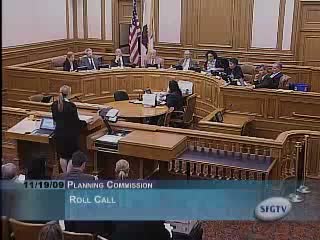
San Francisco — After hours of presentations and public comment, the San Francisco Planning Commission voted 5–2 on Nov. 19 to close the public hearing on California Pacific Medical Center’s (CPMC) 2008 Institutional Master Plan (IMP), a procedural step that brings the informational review to an end while leaving detailed entitlements and environmental review to come later.
CPMC executives and medical leaders told the commission their proposal would centralize tertiary services — moving high‑acuity care into a single Cathedral Hill facility — to improve patient safety and operational efficiency. "The single most effective strategy available to CPMC for providing high quality care, cost effective care for the greatest number of patients is to centralize the tertiary facilities," Judy Lee, CPMC vice president for health system innovation and community benefit, said during the presentation. CPMC also said it intends to replace all 25 residential units that its Cathedral Hill site will remove "as affordable housing," and to work with the Mayor’s Office of Housing and community organizations on relocation plans.
Dr. Mitch Katz, director of the Department of Public Health, told the commission that while a citywide health‑care master plan would be valuable, it could not be produced in the narrow timeframe hospitals face to meet seismic and financing deadlines. He said evidence supports colocation for very high‑acuity services: "The highest level of care is provided at high‑volume places that have the largest number of specialists," Katz said, arguing that for a minority of complex cases centralized expertise matters.
Public comment after the staff and agency presentations produced sharply divided testimony. Tenants, neighborhood groups and tenant advocates said the proposed Cathedral Hill site would accelerate gentrification and displace long‑time low‑income and elderly residents and small businesses. Worker representatives and tenant speakers described the financial hardship of losing jobs or long‑term, low‑cost housing and urged CPMC to commit to on‑site or nearby replacement housing and to timelines for relocation assistance.
Community advocates also pushed the commission to enforce the Van Ness Avenue Special Use District’s residential requirement. Malcolm Yung of the Chinatown Community Development Center asked the commission to clarify whether the project is subject to a three‑to‑one residential‑to‑nonresidential ratio in the Van Ness plan and questioned CPMC’s claimed exemption.
Medical staff, union and construction representatives, and some neighborhood trustees gave anxious support for rapid progress. Nurses, physicians and CPMC medical leaders argued that modern clinical space, single patient rooms and consolidated services are needed for patient safety and to comply with seismic retrofit deadlines. Supporters also highlighted job creation and sustainability commitments that CPMC described for the new buildings.
On specific programmatic questions, CPMC said it needs roughly 100 skilled‑nursing facility (SNF) beds on any given day within the system, and that the IMP proposes to keep 38 SNF beds at the Davies campus while coordinating with city task forces and regional partners to identify alternatives so that required beds remain available during any transition. CPMC cited about $56 million in uncompensated care value provided across its system in the prior year and committed to continue working with the Health Commission Task Force to identify charity‑care and Medi‑Cal commitments.
Commissioners repeatedly asked for clearer, enforceable commitments on timing and locations for replacement housing, how business relocation will be handled for affected small commercial tenants, and whether the Van Ness Special Use District rules would be amended or applied. Jeffrey Nelson, speaking for CPMC, said discussions with the Mayor’s Office of Housing, Chinatown Community Development Center and Tenderloin Neighborhood Development Center had begun and that CPMC "stands ready to replace" not only the legally required units but the full 25 units at full affordability and to locate replacements as close to the site as feasible.
Commissioner Bill Lee moved to close the public hearing; Commissioner Mike Antonini seconded. The motion to close the hearing passed 5–2, with Commissioners Catherine Moore and Christine Olague voting no. Commissioners emphasized that closing the IMP hearing does not approve specific entitlements, and that height, zoning amendments, CEQA review and conditional‑use decisions will be considered in future hearings.
Next steps: the IMP record will be closed for this informational step, and project‑level entitlements, environmental impact reports and any code amendments (including potential Van Ness Special Use District adjustments for hospitals) will come back to the Planning Commission and, where required, to the Board of Supervisors for substantive review and decision.
Votes at a glance: Motion to close the public hearing on CPMC’s Institutional Master Plan — Moved: Commissioner Bill Lee; Second: Commissioner Mike Antonini; Outcome: Passed, 5 yes, 2 no (Moore, Olague).