Get Full Government Meeting Transcripts, Videos, & Alerts Forever!
Get email alerts on the Proposition D topic
No spam. Unsubscribe anytime.
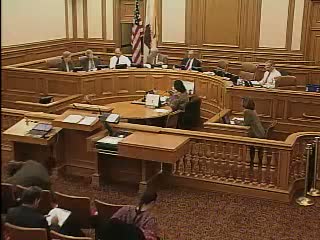
Planning commission hears overview of Proposition D and questions CBD role in Mid‑Market sign district
Summary
The San Francisco Planning Commission held an informational hearing on Proposition D, a ballot measure that would create a special sign district on Market Street (between Fifth and Seventh) allowing new sign types and assigning the Central Market Community Benefit District responsibilities for a signage program; staff and the City Attorney emphasized implementation and legal limits on city advocacy.
The San Francisco Planning Commission convened an informational hearing on Proposition D, the Mid‑Market Arts revitalization and tourism special sign district, during which planning staff detailed what the measure would change and commissioners pressed staff and the City Attorney on how the city would oversee implementation.
Dan Snyder of the Planning Department told commissioners Prop D would create a new special sign district on Market Street (roughly between Fifth and Seventh streets), repeal earlier bans on general advertising within that area, and expressly allow four sign types in the district: roof signs without backdrops; inflatable/balloon/streamer/wind signs; general advertising wall signs that extend above roof lines; and video signs. “From our perspective, the real question here is the implementation and the execution of this measure rather than the concept itself,” Snyder said, adding that the Planning Department identified “a handful of important questions and concerns” about enforcement, jurisdiction and the department’s present capacity to regulate private financial transactions and third‑party business decisions.
The measure would require the Central Market Community Benefit District (CBD) to develop a signage program, select sign companies, review applications for consistency with that program, collect revenue from property owners who install new general advertising signs, and distribute those funds for arts and tourism purposes. Snyder described specific dimensional limits set by the proposition but noted the text does not cap the number of signs on a building and that several provisions would be implemented through CBD processes rather than through direct Planning Code administration.
Kate Stacey of the City Attorney’s Office cautioned commissioners that this hearing is a city resource and that state law bars the use of city personnel or resources to advocate for or against a ballot measure. “Staff and commissioners may not state their opposition or support of Prop D,” she said, and she urged the commission and public to keep remarks factual and balanced.
Members of the public who support the measure argued it is a targeted, neighborhood‑driven tool to help revitalize two blocks of Market Street while preserving city oversight. Steve Vettel, representing proponents, stressed the measure creates layers of review rather than an outright delegation of planning authority: “a sign program and a sign company that’s participating in this program would need approvals by both the CBD and the planning department and the building department to erect a new sign,” he said. David Addington, co‑proponent and owner of the Warfield Theater, said proponents have been working for five years to revitalize the blocks and appreciate the Planning Department’s review.
Supporters said the CBD intends to produce a master plan for the district. “As a CBD board member, it is our intent to create a master plan to look at the 52 buildings, and where a sign can go and where it can’t go,” Bill Worthen said, adding proponents hope to involve planning, DBI, AIA and SPUR in creating contextual guidance.
Other commenters highlighted safety and broader neighborhood goals. Tim Collin, a Market & Sixth business owner, described multiple assaults near his storefront and said prior redevelopment proposals that would have provided about $100,000,000 in tax‑increment financing did not proceed; he urged measures that would bring activity and investment back to the corridor.
Several speakers and commissioners raised concerns about how the new sign rules might interact with historic preservation requirements. Commissioner Moore asked whether the proposed district could conflict with the Market Street Theater and Loft Historic District; staff said possible conflicts could arise but that specific impacts on individual historic properties can only be assessed at the project level and that relevant reviews (including the Historic Preservation Commission where applicable) would still be required.
Commissioner Seguaya asked technical questions about the legislation, including the 10‑foot limit on sign projections and typical sidewalk widths in the area (staff noted sidewalks are generally 25 feet or wider in places), whether any city body is required to approve the CBD’s signage plan (staff said the proposition does not require city review or approval beyond CBD review but allows the CBD to set minimum criteria incorporated into requests for proposals), and how the stated purposes of the Mid‑Market Arts SD would narrow general advertising content allowed in the district; proponents said the intent is to limit general advertising to content consistent with the district’s arts and tourism purposes.
Commissioner Lee asked whether signage revenues would flow to city agencies; Snyder said the proposal affords the CBD latitude over disposition of funds and that the City and County would not receive those monies under the proposal as written.
The commission’s session was informational only; no vote or formal action was taken. President Miguel closed the hearing after questions and public comment and thanked staff for a balanced presentation.
What happens next: this was an advisory, informational hearing; if Proposition D appears on the ballot and passes, the Planning Department, the City Attorney’s Office, the Comptroller’s Office and the Central Market CBD would need to coordinate on the signage program, permitting procedures and enforcement mechanisms.