Get Full Government Meeting Transcripts, Videos, & Alerts Forever!
Get email alerts on the Urban Forestry topic
No spam. Unsubscribe anytime.
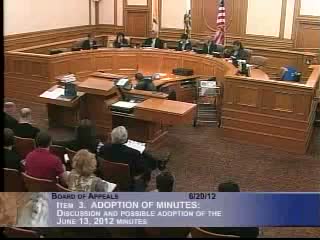
Board overturns DPW denial, allows removal of eight trees at 900 Folsom with 11‑tree replacement
Summary
The San Francisco Board of Appeals on June 20 overruled a Department of Public Works denial and granted a permit to remove eight street trees at 900 Folsom necessary, the developer said, to safely install large prefabricated curtain‑wall panels. The board required the developer to replace the eight trees with 11 trees of equal trunk diameter and canopy, to be approved by DPW Urban Forestry.
The San Francisco Board of Appeals voted unanimously on June 20 to overrule the Department of Public Works’ denial of a permit to remove eight public‑right‑of‑way trees at 900 Folsom Street, granting the removal on the condition that the developer replace the trees with 11 specimens of equal or better trunk diameter and canopy and that DPW’s Bureau of Urban Forestry (BUF) approve the replacements.
Developer Eric Tao, principal of the company building at 900 Folsom, told the board the project will include a residential building with 15 percent below‑market‑rate units and that contractors must hoist large unitized curtain‑wall panels that, he and his construction experts said, cannot be installed safely with the trees in place. “We could find no other way to install these with the trees in place that would not cause a hazard,” Tao said during his seven‑minute presentation, referring to the project’s staging constraints and the panels’ size.
Carla Short, an urban forester with DPW’s Bureau of Urban Forestry, urged the board to uphold the denial, saying the trees were healthy, were part of a Trees for Tomorrow planting effort and could be preserved through alternative staging or temporary sidewalk closures. “Our intention is to preserve these trees,” Short said, adding that DPW staff were not convinced removal was necessary to build the project.
Board members pressed both sides about alternatives, the size and species of replacement trees, and whether the developer had explored sidewalk closure or hoisting from the street with pedestrian protections. Short and other DPW staff gave measurements for the existing trees (about 6–7 inches diameter at breast height and 12–15 feet tall) and said that DPW would expect a minimum of 60‑inch‑box replacement trees to avoid net canopy loss.
After rebuttals from the developer’s team and a short commissioner discussion, President Chris Huang moved to grant the appeal and issue the permit on condition that the developer replace the eight trees with 11 replacement trees “of the same trunk diameter and same canopy” as the existing trees, with the replacement species and final sizes to be determined by DPW BUF. Vice President Frank Fung and the commissioners voted aye; the vote was recorded as 4–0.
The board’s action explicitly ties final replacement specifications to the BUF’s review and approval. The permit record (order number 180189) and DPW’s condition that replacement trees be as large as feasible were part of the motion adopted by the board.
What happens next: The developer must satisfy DPW BUF’s criteria for the replacement trees and coordinate any necessary permits for sidewalk or staging closures. DPW retains oversight on the replacements and may require a planting and establishment plan as a condition of the permit.
Provenance: Board hearing, presentation and deliberations on appeal 12‑057 (SEG 113–SEG 687).