Get Full Government Meeting Transcripts, Videos, & Alerts Forever!
Get email alerts on the CPMC IMP Rebuild topic
No spam. Unsubscribe anytime.
Joint Planning and Public Health commissions hear wide-ranging debate over CPMC master plan and hospital rebuilds
Summary
At a joint informational hearing on Sept. 17, 2009, city health officials, CPMC leaders and dozens of residents and health workers debated the California Pacific Medical Center Institutional Master Plan, focusing on seismic-driven rebuilds, St. Luke’s continuity, psychiatric and skilled-nursing bed losses, charity care and neighborhood impacts. The hearing was informational; no votes were taken.
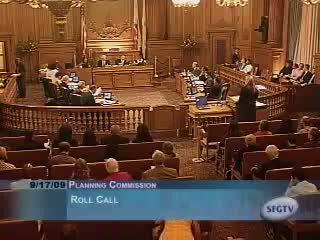
A joint informational hearing of the San Francisco Planning Commission and the San Francisco Public Health Commission on Thursday, Sept. 17, 2009, drew city officials, hospital leaders, nurses, neighborhood groups and union representatives to discuss the California Pacific Medical Center’s Institutional Master Plan and a health-planner review led by the Lewin Group.
Dr. Mitch Katz, director of the Department of Public Health, framed the urgency around California’s seismic law and the city’s capacity needs: “So that would mean the Pacific Campus, the children's campus, and the St. Luke's campus would all close. And were they to close, the city would lose a third of its inpatient hospital beds,” he said, stressing the potential loss of emergency capacity and inpatient services if CPMC campuses are not rebuilt by the statutory deadlines.
CPMC officials, led by Judy Lee, described the IMP as a systemwide strategy to deliver evidence-based, integrated care. Lee said the plan pairs new acute-care facilities with ambulatory and primary-care investments and emphasized disaster preparedness: “We believe the construction of a hospital is the model of patient care in concrete and in steel,” she said, adding that CPMC proposes three hospital sites, expanded outpatient capacity and a plan to add primary-care physicians.
Public testimony split along several fault lines. Many clinicians and neighborhood residents urged firm commitments to keep St. Luke’s open and to maintain local access to care. Dr. Edward Kirsch, chief of cardiology at St. Luke’s, said physicians who formerly opposed the early draft now support the revised plan. Several nurses warned that proposed changes would reduce inpatient and post-acute capacity; one witness said, “I'm concerned with CPMC's plans to close 85% of our Medicare beds.”
Other speakers raised independent-review and scale questions. The California Nurses Association urged independent validation of CPMC’s bed projections and cited an external county review in another Sutter system as a cautionary example. Community groups and schools said that Cathedral Hill’s size and Van Ness frontage could bring neighborhood impacts and urged legally enforceable community benefits and replacement housing when medical office buildings displace residential units.
CPMC provided financial and operational figures: John Gates, CPMC’s chief financial officer, reported charity-care totals for 2008 using two industry standards (approximately $211 million using the state/OSHPD method and roughly $130.1 million under another standard) and CPMC leaders said the system has committed over $220 million to rebuild the inpatient hospital at St. Luke’s and intends to keep that campus open during construction.
Commissioners pressed for more independent analysis and clearer, enforceable commitments. Planning commissioners asked the Health Department and CPMC for detail on how bed distribution will affect San Francisco General, how many skilled-nursing and psychiatric beds will be replaced in the community, and how proposed medical-office development could affect SRO and low-income housing. Several commissioners said the Health Commission’s 20-year pledge for St. Luke’s feels short and suggested longer, legally binding commitments.
The Health Commission noted it had accepted the Lewin Group report and adopted a resolution identifying additional conditions; commissioners described a monitoring task force to track CPMC’s follow-through on eight resolution items and asked the Planning Commission to consider conditions and permitting tools to make those commitments enforceable.
The hearing was informational and no formal action was taken. Commissioners directed staff to continue preparation for the formal Institutional Master Plan hearing scheduled on or after Oct. 15, 2009, and to seek additional analyses and clarifications — including independent validation of projections, clear plans for psychiatric and skilled-nursing bed replacement, and specifics on the neighborhood impacts of Cathedral Hill and associated medical-office development.
Next steps: the full IMP will return to the Planning Commission on or after Oct. 15 for formal review and for environmental review (EIR) to address site and citywide impacts that commissioners said will require unusually broad analysis for a hospital project.