Get Full Government Meeting Transcripts, Videos, & Alerts Forever!
Get email alerts on the Neighborhood Commercial topic
No spam. Unsubscribe anytime.
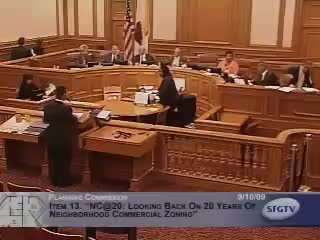
Planning Department releases NC@20 review and recommends comprehensive, funded update of Neighborhood Commercial rules
Summary
The department presented NC@20, a 70‑page review of 20 years of Neighborhood Commercial zoning. Staff recommended a funded, community‑driven comprehensive update of NC rules, operational regulations to support small businesses, and modernization of food/drink categories. Commissioners and stakeholders urged focused hearings and budgeted next steps.
Planning Department staff presented NC@20, a citywide review of 20 years of Neighborhood Commercial (NC) zoning, and recommended a funded, community‑driven process to update land‑use categories, operational regulations and the entitlement process for small businesses.
Dan Sider told the commission NC zoning covers roughly 6 percent of city parcels and that nearly half of the past code amendments affecting NC districts related to food‑and‑drink uses. The presentation highlighted several findings: permit approvals have shifted from nearly all over‑the‑counter in 1987 to about 30 percent today; some named NC districts see many conditional use approvals while others rarely do; and the composition of ground‑floor uses has been relatively stable in some districts even as eating‑and‑drinking establishments have increased in others.
The department’s three ‘cornerstone’ recommendations: (1) launch a single comprehensive, neighborhood‑driven update of NC controls rather than piecemeal fixes; (2) create operational tools and enforcement resources (or identify a lead agency) to address business practices that are not well regulated by zoning; and (3) modernize food‑and‑drink land‑use distinctions to reflect contemporary small‑grocery, coffee shop and restaurant forms and to reduce unnecessary red tape. Commissioners suggested focusing early hearings on core issues (for example, eating‑and‑drinking uses and liquor licensing) and coordinating with the Mayor’s Office and Small Business caseworkers to identify feasible early actions given budget limits.
Staff said the NC@20 report will be forwarded to the Board of Supervisors with a recommended program of next steps and that written public comment will inform the prioritization of follow‑up work. The public offered examples from Union Street, Chestnut Street and the Richmond, noting variations in local needs and the value of merchant associations and clearer notice and entitlement rules.