Get Full Government Meeting Transcripts, Videos, & Alerts Forever!
Get email alerts on the Mobile Food Permitting topic
No spam. Unsubscribe anytime.
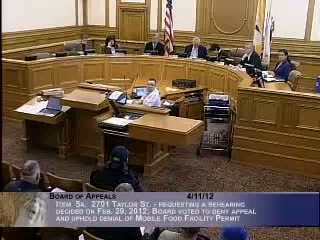
Board denies one rehearing request, upholds DPW decision on mobile coffee permits; second rehearing also denied
Summary
The San Francisco Board of Appeals on April 11 denied two rehearing requests tied to mobile coffee permits sought by Shasha Lewis, ruling the first rehearing request for 2701 Taylor Street denied 3–2 and a second rehearing request on 2801 Leavenworth denied 5–0 after DPW presented additional evidence and neighbors urged maintaining existing restaurant protections.
The San Francisco Board of Appeals denied rehearing requests related to two mobile food facility permit disputes involving Shasha Lewis, who sought permission to operate a mobile cart selling African coffee and tea.
Lewis asked the board to rehear two appeals after the Department of Public Works (DPW) denied mobile food permits on the basis that the proposed cart would be within 300 feet of existing businesses selling 'like food.' In the Taylor Street matter, President Michael Garcia moved to deny the rehearing; the board voted 3–2 to deny the request, with Garcia citing that no new material was presented. Lewis and supporters argued the coffee is culturally distinct from nearby chain offerings and that denying the permit is unfair. "It's just offensive," Lewis said when describing the characterization equating her product with mainstream coffee.
DPW representatives, including John Kwan, told the board that their determination followed prior appellate decisions and community benefit district input identifying multiple nearby eateries—including McDonald's and Starbucks—that serve coffee. For the Leavenworth Street petition, DPW presented additional documentation from police and a station officer identifying eateries within 300 feet that serve light foods; the board voted unanimously (5–0) to deny that rehearing request.
The Fisherman's Wharf Community Benefit District testified that dozens of restaurants operate in the immediate blocks and urged the board not to grant rehearing. Speakers for Lewis, including a distributor and community supporters, said Lewis sells specialty African fair-trade coffee and that the market should allow differentiated small businesses to compete.
The board framed its actions as procedural: rehearing requests require either new material evidence or a showing of manifest injustice. Commissioners who voted to deny the Taylor Street rehearing said the threshold was not met because the evidence presented had been available to DPW at the time of the prior decision. At the Leavenworth rehearing, commissioners concluded the additional police documentation did not show the type of new, decisive information that would overturn prior rulings.
Outcome: both rehearing requests were denied. The board ordered notices of decision to be released.
What’s next: A rehearing denial preserves the prior agency determinations; Lewis and any aggrieved party retain any judicial remedies available under local law.