Get Full Government Meeting Transcripts, Videos, & Alerts Forever!
Get email alerts on the Budget topic
No spam. Unsubscribe anytime.
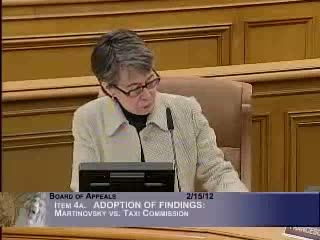
San Francisco Board of Appeals adopts two-year budget after debate over fees and staffing
Summary
The Board of Appeals voted 3–0 Feb. 15, 2012, to adopt its two‑year budget for FY2012–13 and FY2013–14 after a presentation by Executive Director Cynthia Goldstein outlining revenue shortfalls, expense drivers and options to limit fee increases. The board rejected cutting staff or raising filing fees but authorized modest surcharge adjustments if needed.
The San Francisco Board of Appeals voted unanimously Feb. 15 to adopt a two‑year departmental budget for fiscal years 2012–13 and 2013–14 following a staff presentation on revenues, expenses and policy options.
Executive Director Cynthia Goldstein told the board that approximately 95 percent of the department’s revenue comes from surcharges tied to permits and roughly 5 percent from filing fees. Goldstein said the board has experienced multi‑year revenue shortfalls that have narrowed over time — from a reported 16 percent shortfall in 2009 to a projected 3 percent shortfall for the current year, which she estimated at about $26,000–$27,000. She said the department expects to cover that shortfall through expense reductions and that the Mayor’s Office has indicated potential general‑fund support if a deficit remains.
Goldstein outlined expenses and drivers, saying about two‑thirds of the budget covers personnel costs, roughly a quarter pays for services from other city departments (notably the City Attorney’s Office and the Department of Technology for meeting broadcasts and web hosting), and the remainder covers infrastructure and vendor contracts such as interpreters and courier services. She warned that pending labor negotiations and increases in retirement and health costs create uncertainty for projections.
To address projected increases, Goldstein recommended a three‑part approach: reduce the City Attorney work order where feasible (she suggested possible savings of $40,000–$50,000), apply a CPI inflation adjustment (about 3 percent) to surcharge rates — which she estimated would raise about $30,000 if applied across the current surcharge structure — and, only if those steps proved insufficient, pursue legislative changes to increase surcharge rates beyond inflation. She said she did not recommend raising filing fees or reducing staff, arguing that keeping fees low preserves access to the board.
Commissioners questioned the practicality of online filing and the equity of existing fees, noting wide variation (for example, zoning administrator appeals at $600 versus $100 for tree‑removal appeals). Goldstein said the office is moving toward more online forms but has resisted full online filing because of payment issues and the value of in‑person counseling to help potential appellants understand process and deadlines. She also noted the board’s indigency waiver, which can reduce the financial barrier for qualifying applicants.
Commissioner Frank Fung moved to adopt the two‑year budget. President Michael Garcia and Commissioner Rich Hillis voted Aye; the motion carried 3–0 (Vice President Chris Wong was absent and one seat remained vacant).
The board’s budget adoption leaves in place staff’s plan to first pursue internal work‑order reductions and a modest CPI adjustment to surcharges before seeking broader legislative fee changes. Goldstein said the board will continue refining projections with the Controller’s Office and monitor labor negotiations that could affect personnel costs.