Get Full Government Meeting Transcripts, Videos, & Alerts Forever!
Get email alerts on the San Francisco Bicycle Plan topic
No spam. Unsubscribe anytime.
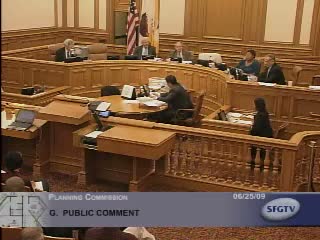
Planning Commission certifies Bicycle Plan EIR and approves general-plan and code changes despite neighborhood objections
Summary
The Planning Commission certified the final EIR for the San Francisco Bicycle Plan and adopted related general-plan and planning-code amendments after a lengthy public hearing that included strong objections from some merchants and residents about notice, lost parking and left-turn lanes and robust support from bicycle advocates and city agencies.
The Planning Commission certified the final environmental impact report (EIR) for the San Francisco Bicycle Plan and adopted related amendments to the general plan and planning code after an extended public hearing that featured competing testimony from merchants and neighborhood residents, bicycle advocates, and city agencies.
Planning staff and the MTA described the Bicycle Plan as a citywide effort to expand a safe bicycle network, improve transit and bicycle connections, and increase secure bicycle parking. The staff presentation explained proposed general-plan language and two map updates (bicycle route maps and the downtown transportation map) and described targeted planning-code amendments to increase required bicycle parking, allow reductions in automobile parking where bicycle parking is provided, and add enforcement authority for bicycle-parking requirements.
Public comment ran long and mixed. Opponents — including business‑association representatives and residents of Second Street, South Beach and Rincon Hill — argued they had had inadequate notice of specific projects (for example Second Street), that some proposed lane and parking changes threaten deliveries and businesses, and that the EIR’s treatment of cumulative impacts and socioeconomic effects required more analysis. Mary Miles (Coalition for Adequate Review) urged the commission to continue certification, saying key findings and mitigations were not timely provided before initiating some plan amendments.
Proponents included the San Francisco Bicycle Coalition, the Bicycle Advisory Committee and the Mayor’s Office. Supporters said outreach and studies had been extensive, that the EIR and mitigation-monitoring program address impacts, and that the plan will deliver safety and environmental benefits. Wade Crowfoot of the Mayor’s Office publicly thanked staff and said the mayor’s office supported the environmental review. Bicycle‑advocacy speakers emphasized safety, mode-shift and greenhouse‑gas benefits.
Commission discussion focused on notice, the adequacy of mitigation measures, and how MTA and staff will consider neighborhood alternatives during implementation. Staff said the supplemental packet corrected and clarified CEQA findings and incorporated the mitigation‑monitoring and reporting program. The commission voted to adopt the CEQA findings for the Bicycle Plan and subsequently adopted the associated general-plan and planning-code amendments; the record shows roll‑call votes for both actions.
What happens next
Certification allows the MTA and City to move forward with project-level engineering and implementation. MTA will consider engineering and construction for individual projects (for example Second Street) where neighborhood input and alternative designs can still be considered during MTA’s implementation process. The Board of Supervisors will consider the general-plan and code amendments and any additional approvals required for project implementation.