Get Full Government Meeting Transcripts, Videos, & Alerts Forever!
Get email alerts on the Mobile Food Permits topic
No spam. Unsubscribe anytime.
Board of Appeals overturns DPW, grants disputed Mission Street mobile-food permit
Summary
The Board of Appeals voted unanimously to overrule the Department of Public Works and issue a contested mobile food permit for a location on Mission Street, finding the prior permit holder did not receive DPW's courtesy notice after a 2010 program transfer.
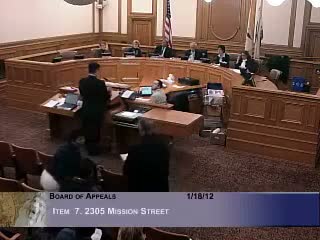
The San Francisco Board of Appeals on Jan. 18 overruled the Department of Public Works and granted a mobile food facility permit for a contested location on the 2300 block of Mission Street, after an extended hearing about whether the prior permit holder had been properly notified of a city-wide permit transition.
The board voted 4–0 to grant the appellant’s appeal and issue the DPW permit, concluding the appellant’s failure to receive DPW’s courtesy notice had effectively tolled the 90‑day period to reapply after legislation changed the permit program. President Michael Garcia read the roll and announced the motion carried unanimously.
Why it matters: The decision followed contested testimony about a December 2010 ordinance that moved mobile‑food oversight from the Police Department to DPW and required prior permit holders to reapply within 90 days. DPW staff described extensive outreach and a good‑faith effort to notify 220 former police permit holders; DPW’s John Kwan told the board that approximately 70 applied during the 90‑day window and that some records from the Police Department were incomplete. The board’s ruling emphasized fairness where a vendor presented evidence that he had not been included in DPW’s courtesy mailing and promptly applied once he learned of the requirement.
What was said: The appellant, represented at the hearing, described paying police‑department fees and other compliance costs and said he was not informed that he needed to reapply with DPW. DPW’s Kwan outlined the process after the December 2010 legislation and said the department performed a “best‑faith” effort to notify permit holders; he also said that if the department had known about a missing record and there had been no competing new application, DPW would have corrected the error. Commissioners pressed both sides about the mailing lists, what outreach occurred, and whether DPW had followed up when the appellant contacted the department.
Board action and rationale: After deliberations that weighed equity for the long‑standing vendor against the department’s administrative process, the board found that the appellant should have been given the practical opportunity to preserve his entitlement. The motion to overrule DPW included a finding that the vendor’s failure to receive the courtesy notice tolled the 90‑day reapplication period; the board therefore issued the permit to the appellant.
What happens next: DPW will implement the board’s direction and the issued permit will be processed consistent with the finding. Commissioners urged DPW to continue to help the displaced vendor find an acceptable location and to improve record transfers so future notice gaps are minimized.