Get Full Government Meeting Transcripts, Videos, & Alerts Forever!
Get email alerts on the Planning Code topic
No spam. Unsubscribe anytime.
Planning Department outlines 351‑page overhaul of San Francisco planning code
Summary
Planning Department staff briefed the Board of Appeals on a proposed 351‑page package of planning‑code amendments — including parking reductions in RC districts, expanded transfer‑of‑development rights in C3 districts, sign‑control changes and incentives for affordable housing — and asked for the board's feedback before further outreach and Planning Commission hearings.
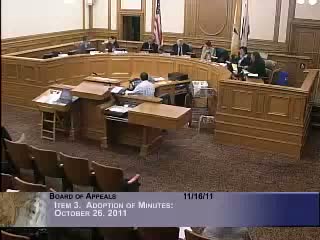
Aaron Starr, legislative affairs staff for the San Francisco Planning Department, gave the Board of Appeals an informational briefing Nov. 16 on a proposed, 351‑page package of planning‑code amendments introduced earlier this year by Supervisor David Chiu. The presentation, delivered to the board by Starr and introduced by Scott Sanchez, the city's zoning administrator, distilled the proposal into nine topic areas and asked for feedback from the appeals board.
Why it matters: The package touches multiple parts of the planning code that routinely come before the Board of Appeals — from rules governing limited commercial uses to how the city treats conversions of historic buildings and how off‑street parking is calculated. Changes to those rules could alter future appeals and the way permit review is handled for projects across San Francisco.
Key points from the presentation included: the department grouped the proposal into nine areas — code simplification; reducing off‑street parking requirements (particularly in RC districts); promoting reuse of historic and existing buildings; expanding support for small, neighborhood‑serving businesses; tightening variances and increasing code compliance; disincentivizing parking through FAR and other changes; incentives for affordable housing; sweeping sign‑control changes; and additional map changes. Starr summarized the package as “about 351 pages” and said it was intended to simplify redundant language, update outdated sections and offer new regulatory options to facilitate adaptive reuse and affordable housing.
Examples Starr highlighted: consolidating awning, canopy and marquee controls; removal of certain minimum parking requirements in parts of the downtown and neighborhood commercial districts; increased authority for the zoning administrator to waive parking under current code sections; expansion of transferable development rights (TDR) across C3 districts to aid preservation and reuse; allowing credit for off‑site publicly accessible open space in certain Article 10 and 11 buildings; narrowing or removing some nonconforming parking‑lot exemptions so surface lots in C3 would cease operation within five years; and broad signage revisions that would add controls in areas such as the Embarcadero and eliminate the Venice Special Sign District’s flashing signs.
Staff said the package also would exclude affordable and group housing from FAR calculations in C3 districts and the Van Ness Special Use District in order to incentivize housing; the department described that provision as an expansion of existing FAR exemptions for affordable units rather than a brand new exemption.
What happens next: Planning staff said the proposal had been presented as an informational item to the Planning Commission and continued for further outreach; the Planning Commission scheduled follow‑up work and the department will accept feedback and coordinate with the City Attorney's Office on legal and implementation questions. The Board of Appeals provided feedback on several technical points for staff to relay to the sponsor and the Planning Commission.
The presentation was informational; no formal action was taken by the Board of Appeals on the code package at this hearing.