Get Full Government Meeting Transcripts, Videos, & Alerts Forever!
Get email alerts on the Human Trafficking topic
No spam. Unsubscribe anytime.
City officials brief Board of Appeals on human trafficking, urge scrutiny of massage permits
Summary
The Department on the Status of Women and SFPD’s Special Victims Unit told the Board of Appeals that human trafficking occurs across San Francisco and urged stricter scrutiny of massage‑establishment permits, citing indicators such as locked rooms, double gates and living spaces behind businesses.
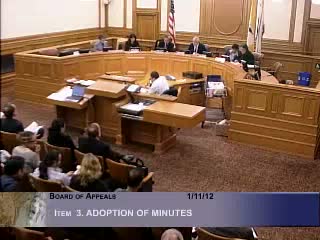
San Francisco officials told the Board of Appeals on Jan. 11 that the city remains a site for both labor and sex trafficking and urged the board to scrutinize massage‑establishment permits and variances.
“San Francisco is a top destination for traffickers,” Emily Murase, executive director of the Department on the Status of Women, told the board as she introduced a briefing prepared for International Human Trafficking Awareness Day. Murase said the city distributes an information packet including examples of online listings and a glossary of terms used to market illicit activity.
Sergeant Arlen Vanderbilt of the San Francisco Police Department’s Special Victims Unit described the city’s multi‑agency response, saying the mayor’s task force conducts monthly inspections with the Department of Public Health, fire and planning staff and the City Attorney’s office. Vanderbilt warned of structural and operational signs officers look for during investigations — locked or curtained private rooms, double‑gated entrances, interior camera systems tied to remote monitoring, and arrangements that indicate employees are living on site. “Those are suggestive of control or coercion,” he said.
Department presenters and law enforcement asked the board to be skeptical of permit variances and to ask detailed questions about high‑risk properties such as massage parlors and nail salons. Murase asked commissioners to act as “upstanders” and to refer concerns to the Special Victims Unit when neighbors observe suspicious activity, such as frequent late‑night traffic and only men entering a property.
Planning staff and police described the task force inspections as focused on code violations, safety and victim identification rather than immediate criminal enforcement. The presenters distributed literature on the San Francisco Collaborative Against Human Trafficking and said community organizations and multiple city agencies are coordinating outreach and survivor services.
The Board did not take formal action on the presentation. Commissioners thanked the panel and moved on to the evening’s appeals calendar.