Get Full Government Meeting Transcripts, Videos, & Alerts Forever!
Get email alerts on the Massage Regulation topic
No spam. Unsubscribe anytime.
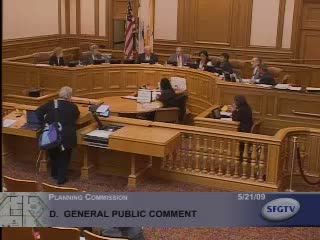
Planning Commission backs Supervisor Chu’s ordinance to require conditional use for accessory massage amid heated public debate
Summary
The Planning Commission voted 4–2 to support code amendments from Supervisor Chu that would require conditional use for accessory massage services, tighten enforcement and allow revocation of entitlements where health permits are revoked; public testimony was sharply divided between anti‑trafficking advocates and worker‑rights groups.
The San Francisco Planning Commission voted 4–2 to recommend zoning changes introduced by Supervisor Chu that would require conditional use authorization for accessory massage operations and give the city stronger tools to revoke land‑use entitlements where public‑health or enforcement actions show illicit activity.
Supervisor Chu told the commission the ordinance grew from a local neighborhood problem involving a facility that allegedly attracted vice incidents and that the legislation is intended to close a loophole that lets secondary massage uses avoid public‑notice, conditional‑use review and neighborhood input.
Planning staff and enforcement planner Dario Jones described more than 130 joint inspections of roughly 80 establishments over three years; staff told commissioners many accessory‑use massage locations have been out of compliance with operational rules and are difficult to monitor because operators use buzzers, hidden rooms and different operator names to reopen closed sites.
Supporters — including the SAGE Project, the Asian Anti‑Trafficking Collaborative and the San Francisco Women’s Political Committee — argued the change would make it easier to hold property owners and business operators accountable and improve inspectors’ access to suspect sites. They urged stricter transparency requirements (for example, visible storefronts, lighting and no buzzer‑only entry) and noted public‑safety concerns near an elementary school.
Opponents — including representatives of the Massage Service Providers Union, the Red Umbrella/U.S. Prostitutes Collective and unionized massage workers — warned the ordinance risks driving already vulnerable immigrant workers underground, worsening safety and labor conditions, and said prior regulation had incentivized unlicensed operations. Speakers asked the city for impact studies and more services for survivors of trafficking.
Commissioners divided: supporters said the proposal targets businesses and property owners rather than individual workers and that a conditional‑use process provides public notice and gives neighborhoods and the commission discretion to set operating conditions. Dissenting commissioners said the measure may not eliminate illegal operators and could have unintended consequences for legitimate small‑scale practitioners. The roll call recorded four votes in favor and two opposed (Commissioners Seguaya and Olague).
What the ordinance does: the amendments would remove accessory‑use exemptions that now allow some massage operations to avoid conditional use in many districts; exempted categories would remain (sole‑proprietor home operators, very small operations, and large hospitals/hotels). The revisions also propose a process to revoke conditional‑use entitlements when the Department of Public Health revokes an establishment’s health permit.
Next steps: the commission’s recommendation will be forwarded to the Board of Supervisors for further consideration.
Vote: Motion to support the ordinance passed 4–2 (Seguaya and Olague opposed).