Get Full Government Meeting Transcripts, Videos, & Alerts Forever!
Get email alerts on the Housing Element topic
No spam. Unsubscribe anytime.
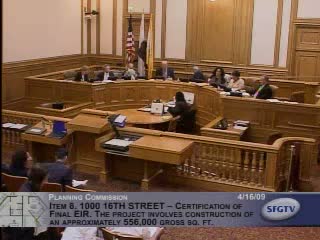
Planning staff present Part 1 of housing element; public and commissioners press for more time, data clarity
Summary
Planning Department introduced Part 1 (data and needs analysis) of the 2009 Housing Element, citing population and housing projections, affordability shortfalls and a larger RHNA target; public commenters and several commissioners asked staff for more neighborhood breakdowns, vacancy verification and clearer income/sales‑price correlations.
Planning Department staff on Thursday presented Part 1 — the data and needs analysis — of the city's 2009 housing element, laying out population and housing trends staff say will shape policy in the full update.
Sarah Dennis Phillips and senior planner Teresa Ojeda told the Planning Commission the draft Part 1 compiles demographic projections, the existing housing inventory and affordability metrics and will be posted to the department's mailing list and website. Staff cited roughly 800,000 residents, more than 340,000 households and ABAG projections that San Francisco's population could top 900,000 by 2030. Staff also noted that 61% of households rent, that many renter units are studios or one‑bedrooms, and that recent median prices make ownership unaffordable for a majority of residents.
Commissioners and members of the public pressed staff for more detail and time to review the draft. Deputy city attorney Marlena Byrne told the commission a Superior Court writ tied to the 2004 housing element requires additional environmental review for some prior policies; staff said they are preparing to comply and that the draft Part 1 will be circulated to the public despite timing constraints.
Public commenters asked for neighborhood‑level breakdowns of ethnicity, housing tenure and sales prices; raised concerns that the American Community Survey and Census undercount might skew vacancy figures; and urged clearer linkage between new market‑rate development and demand for affordable housing. Several speakers asked staff to spell out how many new units in the pipeline are truly affordable, to separate "luxury" market units from other market‑rate production and to report more finely on who lives in recently created condominiums and live‑work lofts.
Staff responded that the data primarily come from ABAG, the U.S. Census Bureau's ACS, the department's housing inventory and the Bureau of Labor statistics, and acknowledged areas where further drill‑downs would be useful. Johnny Jaramillo and Scott Doughty walked through highlights of population, household and housing‑stock trends and said staff will pursue additional sources (PG&E, water records, assessor data) to refine vacancy estimates and neighborhood breakdowns.
What happens next: staff said this is an informational presentation and that Part 1 will be distributed to commissioners and the public; the department will hold additional hearings and accept written comment as it completes analysis and responds to the court writ. The commission and public asked staff for supplemental tables and clearer maps showing where jobs, income groups and housing production are concentrated.
Sources: Planning Department presentation and staff Q&A; public testimony; Deputy City Attorney statement on the writ.