Get Full Government Meeting Transcripts, Videos, & Alerts Forever!
Get email alerts on the Demolition And COA topic
No spam. Unsubscribe anytime.
Commissioners, preservationists clash over demolition rules and Certificates of Appropriateness
Summary
Draft Article 10 tightens the definition of "demolition" (percent thresholds for exterior/interior removal and a strict economic-value test), prompting concern that the changes could block seismic retrofits, affordable-housing projects, and rehabilitation; staff and commissioners discussed adding specific exceptions or giving the Historic Preservation Commission discretion.
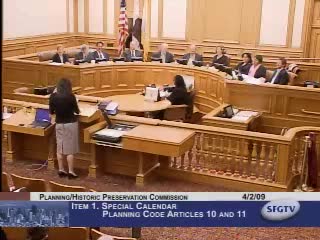
The Planning Department's proposed rewrite of Article 10 drew sustained debate April 2 over how the code should define demolition for landmarks and contributing buildings in historic districts. Tara Sullivan, planning staff, summarized the draft definition and its consequences and flagged a possible mismatch between demolition thresholds and the practical need to allow extensive rehabilitation in certain cases.
Sullivan told the commission that under the proposed language a project would qualify as a demolition if it removed specified proportions of exterior or interior fabric and that, as written, the Historic Preservation Commission would have very limited ability to authorize such demolitions. "On page 61, basically... the only way the HPC can approve a demolition is if there's no substantial reasonable remaining market value or reasonable use," she said, and warned that this "no-value" standard is difficult to meet in practice.
Concerns raised: Commissioners and multiple public speakers said the draft could unintentionally bar needed seismic work or community-serving redevelopment. Commissioner Borden and others cited past cases in which rehabilitation effectively required removing most of a building’s fabric but was nevertheless consistent with preservation goals. Preservation architects and neighborhood advocates urged language that preserves HPC discretion to approve demolition or major alterations when rehabilitation would otherwise be prevented.
Downtown distinction and contributory buildings: Zoning staff explained Article 11 (downtown) treats contributory buildings differently; commissioners emphasized that a building’s age alone does not make it significant and that non-contributing properties or those outside an adopted district should not be subject to the same nearly prohibitive standard.
Enforcement and penalties: Several speakers objected to enforcement language that references misdemeanor penalties for code violations; staff said the draft removes or narrows provisions (for example, paint/waterproofing) to avoid criminalizing routine maintenance failures and recommended relying on the broader planning-code enforcement section instead.
Next steps: Staff proposed drafting targeted exceptions or criteria that would allow the HPC to approve demolition-level work when public benefits (for example, seismic safety or affordable housing) or rehabilitation standards justify it. The commission asked staff to return with clearer criteria and edited code language; no final vote was taken on April 2.