Get Full Government Meeting Transcripts, Videos, & Alerts Forever!
Get email alerts on the Environmental Review topic
No spam. Unsubscribe anytime.
Planning staff and preservation commissioners debate environmental-review role in Articles 10–11 rewrite
Summary
City planning staff told the Historic Preservation Commission that draft language for Articles 10 and 11 should preserve the commission’s charter right to comment on CEQA/NEPA documents but not let the HPC determine initial levels of environmental review; public commenters and several commissioners pushed for ways to surface categorical exemptions affecting historic resources for expert review.
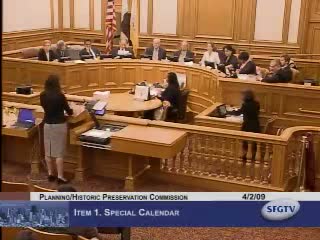
Tara Sullivan, planning department staff, told the joint session on April 2 that the planning department had drafted revisions to Articles 10 and 11 to implement Proposition J and asked commissioners for guidance on several core issues. Sullivan said one of the central questions was language in “Power K,” which describes the Historic Preservation Commission’s authority to review environmental documents.
“The proposition ... does explicitly grant the historic preservation commission that power to review and comment on environmental documents,” Sullivan said, but she cautioned that the current draft reads in a way that could allow the commission to determine the appropriate level of environmental review — a responsibility the department assigns to the Environmental Review Officer (ERO) and department staff. “When we issue a categorical exemption, it is a final piece of paper,” she said, noting that the department “issues hundreds of categorical exemptions, if not thousands.”
Why it matters: Commissioners and members of the public told staff they fear that categorical exemptions (CatExes) that affect historic resources are sometimes finalized without enough expert eyes on them. Several preservation professionals urged an internal or code-based mechanism for the HPC or qualified reviewers to flag incomplete or incorrect CatExes so records can be corrected before finalization.
Public input: Gigi Platt, a public commenter, said that in her experience a CatEx ‘‘may or may not be complete’’ and that a mechanism allowing professionals to add information to the record had worked in recent cases. Architect Joe Butler agreed, saying a small panel of preservation experts ‘‘would be beneficial to the public in participating in CatEx and other CEQA reviews.’’
Staff response and next steps: Sullivan said the department is exploring internal procedures that would allow corrections to categorical exemptions without creating the operational burden of issuing drafts for every CatEx. She also said the revised draft preserves the charter-granted ability for the HPC to review and comment on CEQA documents; staff recommends striking language that appears to let the HPC set the initial level of review. The commission asked staff to return with clearer options for handling CatExes that affect historic resources.
No formal votes were recorded on April 2; staff and commissioners agreed to continue the discussion at upcoming hearings. The Planning Department said it will consult the City Attorney and the Environmental Review Officer to craft workable language and procedures.