Get Full Government Meeting Transcripts, Videos, & Alerts Forever!
Get email alerts on the Pharmacy Permit Baydrug topic
No spam. Unsubscribe anytime.
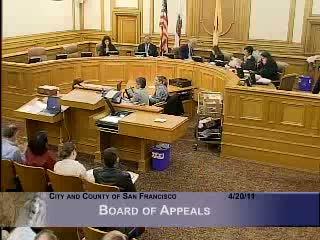
Board of Appeals upholds Bay Drug permit with required security measures
Summary
After a rehearing, the San Francisco Board of Appeals upheld a building permit for Bay Drug at 281 Turk Street but imposed mandatory security and monitoring conditions and required the permit holder to reconcile permit valuation with DBI. The vote was 5‑0.
The San Francisco Board of Appeals on April 20 upheld a building permit for Bay Drug’s proposed pharmacy at 281 Turk Street in the Tenderloin but attached a package of security and operational requirements aimed at limiting public‑safety impacts.
Opponents urged the board to revoke the permit, arguing the pharmacy would worsen prescription‑drug diversion and neighborhood crime. David Wagner, pro bono attorney for Housing Corp., said the permit file showed timeline and valuation discrepancies — notably a $40,000 valuation on the permit application and later statements that construction costs exceeded $100,000 — and argued the permit had been obtained “in bad faith.” Wagner told commissioners the neighborhood’s experience near “Pill Hill” made another dispensing outlet a risk: “The last thing [the Tenderloin] needs is another pharmacy,” he said.
Supporters, including the North of Market/Tenderloin Community Benefit Corporation, neighborhood groups and the building’s landlord, urged the board to allow the business. Elaine Zamora of the CBD said community meetings with the applicant convinced the board that the owners had engaged neighbors and planned measures to manage safety concerns. Dina Hilliard, executive director of the North of Market/Tenderloin CBD, said the group surveyed hundreds of residents and decided the pharmacy owner had addressed safety concerns through outreach.
Captain Kevin Garrity of the San Francisco Police Department said police had met with both sides, outlined public‑safety concerns and recommended mitigation measures but did not take an administrative position on the permit. Garrity said police resources and staffing levels affect deployment in the district, and that the department would monitor any new business that opens in the area.
After deliberations, the Board adopted a motion to deny the appeal and uphold the permit on the condition that a set of security and operational measures be recorded as a Notice of Special Restrictions on the property. Those conditions, drawn from a planning brief and police recommendations, include 24‑hour monitored camera surveillance of the pharmacy and adjacent sidewalk, contracted on‑site security at opening and as needed, posted no‑loitering rules, behavior monitoring inside the store, secure handling and storage procedures for controlled substances, and other measures to maintain a view corridor and minimize sidewalk congregation. The board also required the permit holder to present DBI and Planning with an accurate construction cost valuation to reconcile permit fees; any differential in fees must be paid. The motion passed 5‑0.
The board’s decision preserves the planning and building approvals but creates an enforceable set of operational restrictions the property must follow as a condition of the permit. The parties were told the usual administrative and judicial review options remain available to either side.