Get Full Government Meeting Transcripts, Videos, & Alerts Forever!
Get email alerts on the Affordable Housing topic
No spam. Unsubscribe anytime.
Supervisor proposes using in-lieu inclusionary fees to buy rental units to preserve long-term affordability
Summary
A supervisor told the Planning Commission he wants 10% of inclusionary in-lieu fees, up to $15 million, set aside over time to allow city partners to buy and preserve privately owned rental units — including foreclosures — as permanently affordable housing. Commissioners raised questions about administration and scope.
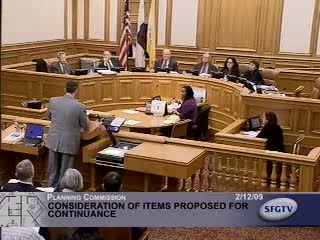
Supervisor Chris Dailey introduced legislation at the Planning Commission on Feb. 12 that would direct up to 10 percent of inclusionary in-lieu fees into a fund that could grow to $15,000,000 for use in acquiring rental housing to keep units affordable over time. "This legislation is really just a financing scheme to allow for up to $15,000,000 into a kitty at a clip of 10% of the in-lieu fees," he said, describing the fund as a way to buy small scattered-site rental units, vacant units or foreclosures and retain them as affordable.
The proposal would broaden who could hold and manage properties purchased with the fund, explicitly allowing cooperatives and community land trusts as forms of ownership, Dailey said. He said the 10 percent figure is a "political number" intended to start a new effort and could be raised if the approach proved effective.
Commissioners and members of the public pressed for details about administration and eligibility. Several asked whether the Mayor's Office of Housing (MOH) would manage the program and whether for-profit developers or only nonprofits could qualify to implement deals. Planning staff and the supervisor said MOH would administer the fund and that the legislation is not prescriptive about which actors might bid to implement projects, but that implementation guidance would be developed by MOH.
Commissioners also questioned whether in-lieu fees can currently be used to acquire existing housing. The supervisor and staff said in-lieu fees are commonly used to subsidize conventional affordable housing projects and that rehabilitation and acquisition have precedent through community-based providers, but the ordinance as written would explicitly allow purchases for preservation.
Supporters and critics in public comment framed the proposal within competing priorities: some argued that buying foreclosed units could be a rapid way to increase permanently affordable stock, while others urged caution about diverting in-lieu funds from conventional development projects. The commission did not vote on the legislation; staff said the matter would be calendared for further review and the supervisor said he would follow up with commissioners before the next appearance.
Next steps: staff follow-up on administration details and any calendar date for formal action.