Get Full Government Meeting Transcripts, Videos, & Alerts Forever!
Get email alerts on the Foreclosures Tenants topic
No spam. Unsubscribe anytime.
Tenant advocates tell Planning Commission foreclosures are creating hidden renter crises
Summary
Advocates told the San Francisco Planning Commission that the 2008 foreclosure surge has significant effects on renters — utility shutoffs, loss of landlord contact, and confusion about tenant protections — and urged coordinated city outreach and notice programs to protect affected households.
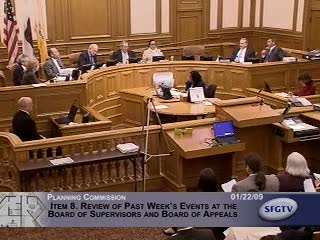
Dean Preston, director of Tenants Together, and Sarah Short, executive director of the Housing Rights Committee of San Francisco, told the Planning Commission on Jan. 22 that tenants are frequently overlooked victims of the foreclosure crisis and urged stronger citywide outreach and coordination.
"Tenants truly are, innocent victims of the foreclosure crisis," Preston said, describing statewide and local data showing sharp increases in foreclosures in 2008 and estimates that 25–38 percent of those properties are tenant occupied. He said some large San Francisco landlords deeded properties back to banks rather than undergoing formal foreclosure, affecting roughly 1,500 units in one case and complicating tenants' ability to learn about or assert their rights.
Short told commissioners the Housing Rights Committee has seen a steady increase in cases involving utility shutoffs, missing property managers and brokers pressuring tenants to vacate. She described situations in which tenant occupants find utilities cut off because previous owners stopped paying bills and successors or brokers fail to pick up responsibilities or to inform tenants about their legal protections. Short said the assessor's office has agreed to send notification letters to occupants in foreclosed properties and that a City Attorney memo outlines roles for local agencies in preventing PG&E shutoffs.
Commissioners asked about the Planning Department's role. Planning staff and Director Badner said the department's authority is limited: foreclosure is principally a financing and property-ownership issue outside the planning code. Staff said the department can support cross-agency outreach and enforcement where appropriate, and that they are coordinating with the assessor, Rent Board and other city agencies. Several commissioners urged continued contact with the assessor and the mayor's office of housing, and asked staff to report back if additional planning tools or monitoring tasks are feasible.
Public commenters described local impacts, including buyer confusion where developments were marketed under federal 80/20 senior occupancy representations, worries about condo and live-work project enforcement, and calls for more proactive notice of restrictions (CC&Rs) and enforcement. Tenants and owners asked the City to help buyers and renters who purchased or reside in properties sold under misleading terms.
The presentation did not result in a formal Planning Commission vote; staff and advocates said the next practical steps include interagency notifications, the assessor's occupant letter program, a statewide tenant foreclosure hotline, and further coordination with the Mayor's Office of Housing to pursue funding and stabilization programs.
The department agreed to provide commissioners with additional data and to pursue limited sampling of existing senior or restricted units to better assess how widespread enforcement gaps may be.