Get Full Government Meeting Transcripts, Videos, & Alerts Forever!
Get email alerts on the Housing topic
No spam. Unsubscribe anytime.
Commission approves St. Peter—9s supportive-housing actions at 20 Ninth Avenue
Summary
The Planning Commission approved CEQA findings, zoning map reclassification, conditional-use authorization and related actions for a supportive-housing project on the St. Peter's Episcopal Church site at 20 Ninth Avenue, enabling about 20 units of housing with on-site supportive services for developmentally disabled adults.
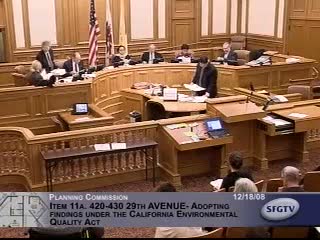
The Planning Commission on Dec. 18 approved a package of actions to enable a supportive-housing project at the St. Peter—9s Episcopal Church site at 20 Ninth Avenue.
Planning staff reviewed the project—9s scope, which would create an infill housing site of roughly 11,800 square feet and enable a higher density through rezoning one parcel from RH2 to RM1. The project sponsors described plans for about 20 units of supportive housing and social-service space to serve developmentally disabled adults; Toolworks will provide on-site services. "We have been honored to have opportunities...and became very aware of their needs," Father David Rickey told the Commission, urging approval and describing parish support and petitions backing the project.
Architectural materials showed a three-story building stepped to match the neighborhood rhythm and a deeper rear yard than existing conditions. Neighbors asked that conditions be enforced to hold the design and limit off-hour construction impacts; a few raised concerns about parking and the need for clear conditions on construction hours and community liaison functions. Project supporters and the service provider said the city-wide shortage of supportive housing for people with developmental disabilities makes the project important.
Commissioners noted extensive outreach and several design iterations. The record shows letters in support (including from the local supervisor) and a small number of written objections related primarily to demolition of a historic resource that the applicants said was not feasible to preserve. After moving and seconding motions that incorporated amendments read into the record and standard CEQA findings, the Commission voted to approve the related zoning, conditional-use authorization and associated CEQA findings subject to the mitigation and monitoring program included in the motions.
Conditions require a community liaison, implementation of the mitigation monitoring program and other standard controls. The Commission emphasized the importance of continued dialogue between project sponsors and adjacent neighbors during construction and early operations.