Get Full Government Meeting Transcripts, Videos, & Alerts Forever!
Get email alerts on the Land Use topic
No spam. Unsubscribe anytime.
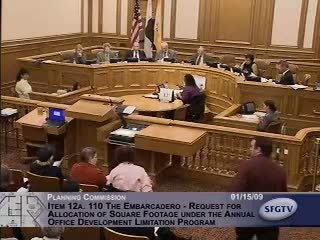
Planning Commission narrowly approves height increase at 110 Embarcadero after hours of public testimony
Summary
The Planning Commission voted 4-3 to move forward with rezoning 110 Embarcadero from 84 to 130 feet, a decision tied to the project's bid for LEED Platinum designation. Supporters argued green design and economic viability; opponents called the action spot zoning and urged a full EIR. Commissioners attached conditions including an errata-based motion and a Borden amendment to require follow-up on LEED certification.
The San Francisco Planning Commission voted 4-3 on Jan. 15 to advance a rezoning that would allow a 46% height increase at 110 Embarcadero, reversing the planning staff's earlier recommendation and triggering vigorous public opposition.
Supporters, including the project sponsor and some commissioners, said the revised design meets long-standing sustainability goals. Paul Paradis, senior vice president with Hines, said the developer had redesigned the project to "eliminate all of the parking" and retain its LEED Platinum aspirations. Commissioner Borden said he believed the project could set a new standard for green office development.
Opponents, including neighborhood groups and waterfront activists, said the case amounted to spot zoning that would set an inappropriate precedent for the Embarcadero. "Spot zoning undermines the integrity of the planning process," Nan Roth of Telegraph Hill Dwellers told the commission. Speakers from the Barbary Coast Neighborhood Association, San Francisco Tomorrow and other groups urged rejection or a full environmental impact report, citing shadow impacts and compatibility with the waterfront plan.
The staff presentation included an errata sheet and documentation intended to support the mitigated negative declaration and proposed zoning map amendments. Commissioners debated shadow studies, the city's downtown plan context (including historic stepping-down to the waterfront), and whether the LEED commitment justified a reclassification of that single site. Commissioner Antonini said removing the parking made the proposal more compatible with sustainability goals; Commissioner Moore, who opposed the measure, said she was unconvinced the green benefits justified a break with the waterfront plan.
On the motion (moved by Commissioner Antonini and amended by Commissioner Borden), the roll-call showed Antonini, Borden, Lee and Miguel voting yes; Commissioners Moore, Seguaya and Olague voted no. The commission recorded the motion as passing 4-3. The action will require separate approvals by the Board of Supervisors for general plan and zoning map changes and includes a condition that the sponsor make best efforts to achieve LEED Platinum and report back if certification is not achieved.
The commission's vote does not by itself rezone the property; the legislative approvals and any challenge through the environmental review process remain possible next steps. The staff record, errata and public comment will be part of the project's file going to later hearings.