Get Full Government Meeting Transcripts, Videos, & Alerts Forever!
Get email alerts on the Historic Preservation topic
No spam. Unsubscribe anytime.
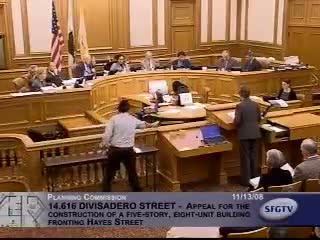
Planning commission orders full EIR for Harding Theatre after weeks of debate
Summary
After hours of public testimony, including preservation experts and theater groups, the Planning Commission voted unanimously to require a full environmental impact report for the proposed Harding Theatre redevelopment, citing substantial public concern about impacts to historic character and cultural uses.
The San Francisco Planning Commission voted 7–0 to require a full environmental impact report for the proposed redevelopment of the Harding Theatre at Divisadero and Hayes. The unanimous decision, reached after an extended public hearing, came in response to an appeal by Friends of 1800 arguing the project’s planned alterations could have significant adverse effects on a building staff deems eligible as a historic resource.
The decision followed hours of public comment from preservationists, theater advocates and neighborhood residents. Arthur Levy, attorney for Friends of 1800, argued that the project would “materially adversely” affect the Harding’s character and urged the commission to order an EIR under the California Environmental Quality Act. Multiple experts submitted written statements alleging risks to character‑defining features including the stage and auditorium configuration.
The developer and its preservation consultants said staff’s mitigated negative declaration and the revised project meet applicable Secretary of the Interior standards and that many of the proposed changes would be reversible. Jonathan Perlman, an expert for the sponsor, testified the proposed alterations would be reversible and that adaptive reuse was an appropriate outcome for the long‑vacant property.
The commission’s deputy city attorney, Elaine Warren, advised that once the commission has identified what it believes are the building’s character‑defining features, the fair‑argument standard requires an EIR if substantial evidence supports a reasonable argument the project could have a significant adverse effect. Commissioners found the testimony and documentary submissions met that threshold and voted to require an EIR. The vote also led the commission to continue related project hearings indefinitely while the EIR is prepared.
What’s next: the department will prepare a scope for the EIR that will be subject to public comment; the developer and community groups will have an opportunity to propose studies, alternatives and mitigation. The commission says the EIR process will examine preservation alternatives, potential for reuse as live performance space and cumulative neighborhood impacts, then return to the commission for certification and final project deliberation.