Get Full Government Meeting Transcripts, Videos, & Alerts Forever!
Get email alerts on the Administrative Procedure topic
No spam. Unsubscribe anytime.
Board gives P & S Towing more time to brief disputed findings
Summary
The Board of Appeals continued a contested findings adoption involving P & S Towing to Sept. 15 and allowed up to four pages of additional briefing from the appellant to specify errors in the draft findings, citing concerns about post‑hearing material and fairness.
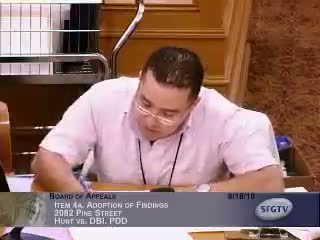
The San Francisco Board of Appeals on Aug. 18 continued a contested adoption of findings relating to P & S Towing (Kohler) to Sept. 15 and set a four‑page limit for additional written submissions from either side to address perceived errors.
Appellant counsel Anne Feldon argued the draft findings included allegations that post‑dated the original hearing and raised due‑process concerns. Feldon called allegations by SFPD witnesses "false accusations" and said tow‑company clients were intimidated prior to proceedings. Sergeant William Coggan, appearing for SFPD, denied the accusations and told the board the departments evidence supported the findings.
Commissioner Michael Garcia asked that the appellant be given a short written window to walk the board through the exact parts of the draft findings he believes are erroneous. The board set the appellants brief due two weeks before the continued hearing and allowed the department one week to reply, with a maximum of four pages each. The board voted unanimously to continue the matter to Sept. 15, 2010.
The continuance preserves the boards ability to adopt, amend or reject the written findings after receiving the limited briefing and reviewing the record. The action does not itself change the underlying administrative findings that the board had earlier prepared for adoption.