Get Full Government Meeting Transcripts, Videos, & Alerts Forever!
Get email alerts on the Western Soma Plan topic
No spam. Unsubscribe anytime.
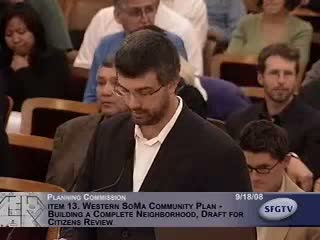
Commission authorizes environmental review for Western SoMa community plan after lengthy public comment
Summary
The Planning Commission unanimously authorized environmental review for the Western SoMa draft community plan, recognizing it as the community's preferred alternative. The multi‑year task force plan directs housing growth, open‑space improvements, transportation changes and protections for residential enclaves; it drew widespread support and some critiques about outreach and regional trade‑offs.
The Planning Commission unanimously authorized the planning department to begin environmental review of the Western SoMa Community Plan draft and recognized the draft as the community’s preferred zoning option.
Supervisor Michela (Supervisor Daly introduced the task force’s three‑year effort and the plan’s 13 guiding principles. The document aims to protect low‑rise residential enclaves (recommending 40‑foot limits in those clusters), increase heights and housing capacity along appropriate transit corridors (Folsom/Townsend), clarify industrial/PDR policies, and create a program of community benefits (parks, transit, neighborhood safety and funding mechanisms). DPH staff reported that the plan was evaluated with the department’s Healthy Development Measurement Tool.
The meeting featured extensive public comment: dozens of residents, business groups, civic organizations, developers and advocacy groups testified. Supporters — neighborhood groups, the Neighborhood Network, the Residential Builders Association, the Small Business Network, and many community organizations — praised the exhaustive outreach and the plan’s balance of housing, jobs and open space. Critics including SPUR urged stronger alignment with regional housing and climate goals and questioned some proposed caps and fees.
Planning staff and task‑force members said the next step is scoping the EIR, refining alternatives and resolving outstanding technical issues (PDR loss/replacement rules, fee design and legal review). The commission’s action was to authorize the EIR and ask staff and the task force to continue public engagement as environmental review proceeds.
"This reflects three years of community labour," said task‑force chair Jim Meeko. "We’ll continue to refine the plan as part of the EIR process."