Get Full Government Meeting Transcripts, Videos, & Alerts Forever!
Get email alerts on the Eastern Neighborhoods Package topic
No spam. Unsubscribe anytime.
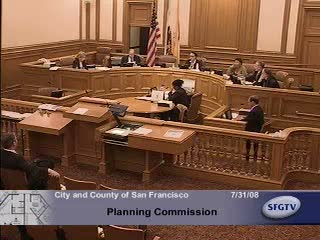
Commission votes motion of intent on Eastern Neighborhoods package amid pipeline fee clash
Summary
After hours of testimony the Planning Commission moved a motion of intent to approve the full Eastern Neighborhoods rezoning package subject to additional changes returned next week, while commissioners and stakeholders disagreed over grandfather dates and pipeline fees.
The Planning Commission on July 31 voted a motion of intent to adopt the Eastern Neighborhoods rezoning package, but left several contested items for final action next week after heated public testimony on pipeline grandfathering and fee dates.
Motion and public comment: After lengthy public comment from neighborhood groups, developers and business owners, the commission’s motion of intent would advance the entire rezoning package to the Board after staff incorporates final changes. The city attorney advised that next‑week public comment should be on the integrated program rather than only on late edits, and commissioners confirmed that the full package will be available to the public prior to the next hearing.
Pipeline/date controversy: A central point of contention was which filing or notice date should determine which projects pay the proposed Eastern Neighborhoods impact fees and to what level. Staff recommended a trigger date tied to a board resolution in January 2007; other stakeholders urged an Aug. 30, 2007 grandfather date (a compromise earlier discussed by the commission) or graduated fee schedule; developers argued projects filed earlier should not face the full fee and asked for an amortized or graduated approach. Staff said it can run the pipeline database and quantify how many projects fall on each side of proposed dates and will present those numbers to the commission.
Other contested items: Mission Street heights and neighborhood‑level protections drew extended discussion. Some speakers urged 85‑foot heights near transit stations and stronger acquisition/rehab spending on affordability; others raised health and freeway‑adjacency concerns for tall buildings near elevated roadways and asked for Caltrans and public‑health input. Several neighborhood groups asked for conditional uses for certain services (health clinics) and for enhanced local engagement through a Citizen Advisory Committee (CAC); staff proposed a single citywide CAC with neighborhood representation to allocate funds as they accrue.
Process and availability of materials: Multiple public commenters and commissioners criticized costs and the timing of voluminous staff materials; staff confirmed a CD and website posting would be made available and also said staff will distribute printed copies where economic hardship prevents purchase. City attorney staff reminded commissioners that zoning votes and fee decisions are at the commission’s discretion and that prior commission guidance on springing conditions could be superseded by a later motion.
What happens next: Staff will produce a final staff report and a pipeline impact memo with counts showing how many projects would be affected by alternative grandfather dates. Commissioners requested clearer fee amortization and incentive language, and staff agreed to return with more detail in time for the next hearing.
Ending: The commission recorded the motion of intent and the item will be carried to the next meeting where final votes, fee decisions and any outstanding code language will be adopted or modified.