Get Full Government Meeting Transcripts, Videos, & Alerts Forever!
Get email alerts on the Hybrid PDR topic
No spam. Unsubscribe anytime.
Planning staff outlines 'hybrid PDR' use and links zoning to workforce incentives
Summary
Staff presented a new 'hybrid PDR' land use and proposed tying it to Enterprise Zone tax credits and workforce programs; they proposed monitoring, a five‑year review and fee incentives or partial forgiveness tied to hiring goals.
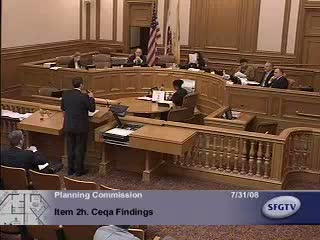
Planning staff and the Mayor’s Office on July 31 laid out a multi-part proposal to preserve production, distribution and repair (PDR) jobs while allowing adaptive reuse and limited office uses in the Eastern Neighborhoods.
The staff proposal creates a new land use, called “hybrid PDR,” defined as a building with both office and PDR functions where at least one‑third of the usable area is PDR and at least one‑third is office; the remaining third may be other nonresidential use. Hybrid PDR would be allowed as‑of‑right in PDR‑1 districts for three‑story (pre‑1950) buildings and in new construction subject to one‑to‑one replacement of any displaced PDR.
The Mayor’s Office described a workforce linkage: businesses in hybrid PDR buildings would be required to register with Enterprise Zone staff so tenants know about tax credits and payroll‑tax reductions; staff proposed a target that 25% of new employees in those buildings be Enterprise‑Zone eligible within five years, and monitoring at year 2 and year 5 with an automatic review that could change the code to conditional use if goals are not met.
Staff also proposed a legitimization pathway for existing de‑facto office uses: a 3‑year window during which property owners may seek zoning‑administrator review to legalize historically used office space as legal nonconforming office, with limited expansion allowances; such conversions could trigger fee differentials because office uses have higher TIDF and jobs‑housing linkage impacts than industrial uses.
Fees: Sarah Dennis of the Planning Department explained the methodology for charging fees on conversions and new hybrid buildings. Conversions from industrial to office would trigger differential fees (e.g., transit and housing linkage differentials estimated in the memo). New hybrid construction could face a combined fee package staff estimated at roughly $30–$31 per square foot (including Transit Impact Development Fee and a proposed Eastern Neighborhoods impact fee). Staff recommended amortizing conversion and new‑space fees and explored partial fee forgiveness if workforce goals are met.
Questions and concerns: Commissioners and public speakers raised competitiveness concerns — asking whether high fees or Prop M office limits would push hybrid uses out of the city, whether fees would raise rents, and whether incentives would be sufficient to attract desired firms. Staff and the Mayor’s office said they would return with more concrete amortization and rebate mechanics and maps overlaying Enterprise Zone coverage.
What happens next: Staff will return with draft code language, fee amortization options, and an approach to incentivize enterprise hiring (for example staged fee payments with a final balloon amount or partial forgiveness based on meeting hiring targets). The commission indicated interest in using fees as an incentive tool but asked for specifics before final adoption.