Get Full Government Meeting Transcripts, Videos, & Alerts Forever!
Get email alerts on the Public Health Tobacco topic
No spam. Unsubscribe anytime.
DPH outlines rising suspension lengths for tobacco permits as Board questions economic impact
Summary
San Francisco Department of Public Health reported increased suspension lengths and summarized enforcement data from 2007–2009; commissioners pressed the department on recordkeeping, local measurement, and whether longer suspensions unfairly burden small retailers.
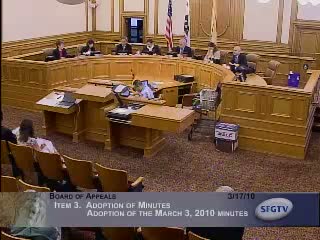
SAN FRANCISCO — The San Francisco Department of Public Health (DPH) told the Board of Appeals on March 17 that it has increased the suspension lengths it recommends for tobacco‑sales permits in recent years and summarized enforcement activity from 2007 through 2009.
John Sinojou, representing DPH, told the board the department reviewed three years of records and that “we currently have a total of 1,061 licensed tobacco establishment in the city.” He cited San Francisco Health Code provisions that give the director authority to suspend permits and described how DPH has applied progressively longer suspensions, noting the department raised its typical suspension ranges in 2009.
DPH summarized snapshots for the three years: in February 2007 SFPD decoy operations visited roughly 403 establishments and issued 57 citations; DPH issued 56 citations with suspensions typically ranging 10–30 days and six appeals to the Board (all upheld). In February 2008 SFPD conducted about 333 visits with 37 citations and DPH issued 38 citations with suspension ranges of 15–45 days; 29 suspensions were served and nine were appealed (the Board upheld nine, reduced two suspension periods, and one case withdrew). In February 2009 SFPD visited 468 establishments and issued 58 citations; DPH issued 58 citations that year, including 20 second‑time violators, and reported suspension ranges of 25–70 days with 40 establishments serving suspensions and 18 appealing to the Board.
Sinojou cited the legal framework in his presentation, noting that state law prohibits sales to minors and that the San Francisco Health Code (as presented) sets out suspension authority and ranges. He said the department provides routine inspections and outreach materials to retailers and that SFPD decoy operations generate the referrals used by DPH.
Board members used the presentation to press DPH on several operational points. Commissioners asked whether the dates in the department’s spreadsheets referred to dates of offense or dates of hearing; DPH said the offense dates drive case records, hearings are taped, and transcripts are produced only if requested. Commissioners also asked about the data source: the statewide randomized survey the department cited shows a decline to 8.6 percent statewide in 2009, but DPH said it does not have an inexpensive, citywide randomized survey for San Francisco and instead uses internally generated random samples to direct SFPD decoy visits.
Several commissioners raised economic concerns. One questioned whether the apparent decline in illegal sales to minors can confidently be attributed to DPH programs, and argued the board should weigh the effect of longer suspensions on small, marginal operators especially during weak economic periods. DPH acknowledged the concern, said inspectors recommend suspension days and the director exercises discretion (for example, reducing a suspension for an elderly, hard‑of‑hearing defendant), and estimated roughly 10 percent of cases involve tobacco‑only, mom‑and‑pop establishments.
Commissioners asked DPH to provide consistent economic indicators and case history in hearing files going forward — for example, brief notes from inspectors on whether a business is a tobacco‑only operation or carries other products — and DPH agreed to present that material when cases are scheduled for director hearings.
The Board did not take formal action on policy changes during the meeting; the presentation closed with commissioners thanking DPH for the report and requesting clearer supporting documentation in future director hearings.
What’s next: Commissioners requested that DPH include consistent evidence about store type and percentage of sales in future director‑level records so the Board can better weigh penalty decisions.