Get Full Government Meeting Transcripts, Videos, & Alerts Forever!
Get email alerts on the Eastern Neighborhoods topic
No spam. Unsubscribe anytime.
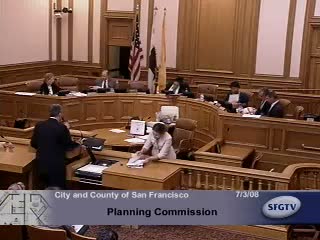
Planning Commission hears day‑long debate on Eastern Neighborhoods: PDR vs. office, inclusionary tiers and implementation questions
Summary
Staff presented technical changes and policy trade‑offs for the Eastern Neighborhoods rezoning (inclusionary tiers, middle‑income option, PDR/office controls and an "innovative industries" permit). Public commenters and commissioners pressed for protections for existing PDR businesses, small enterprise space, stronger neighborhood benefits and clearer pipeline implementation; staff set follow‑up dates July 10 and July 24 and agreed to provide additional data.
Planning Department staff spent the July 3 hearing walking commissioners and the public through a suite of technical and policy proposals for the Eastern Neighborhoods rezoning, focusing on affordable housing requirements, controls to protect production‑distribution‑repair (PDR) land, and a staff/Mayoral Office proposal to allow certain hybrid "innovative industries."
Staff said inclusionary requirements would be tiered so that taller projects deliver larger percentages of affordable housing: the presentation outlined a baseline inclusionary requirement (15% in many places) with higher on‑site percentages in higher tiers and a middle‑income option averaging roughly 135% of area median income ("middle income" targeted at about 100–150% AMI). Staff offered a small‑project fee option to ease burdens on developments of 20 units or fewer and discussed a land‑dedication alternative. "We're favoring a three‑tier approach: as heights go up, the requirements go up," planning staff told the commission.
A central rift at the hearing was office vs. PDR: staff proposed floor‑by‑floor limits on non‑accessory office in PDR districts and an "innovative industries" option offered by the Mayor’s Office of Economic and Workforce Development that would permit hybrid office/PDR uses in specific buildings via a permit tied to NAICS codes. Michael Yarny of the Mayor’s Office described the permit as a privilege, not an automatic right, with monitoring through payroll‑tax NAICS registrations and linkage to enterprise‑zone tax incentives. "The new PDR is hybrid," Yarny said, urging flexibility and monitoring rather than a strict office/PDR split.
Public commenters and business groups pressed three recurring themes: (1) protect existing PDR businesses from displacement and provide realistic grandfathering or transitional rules for legal nonconforming uses; (2) allow modest accessory office and live/work flexibility so small and growing hybrid firms can remain in‑place; and (3) extract stronger public benefits (higher inclusionary rates, tax increment tools, and greater fees) when market‑rate development proceeds. "If you open it up to a broader range of office and residential uses, inevitably land values go up and the very businesses we want to keep will be forced out," said Tony Kelly of the Potrero Boosters. Kate Sophas of Pacific Community Ventures and neighborhood groups described multiple small manufacturers (Timbuktu, artisanal food producers) that combine design, e‑commerce and in‑city production and said zoning should allow accessory office and small floorplates to support those firms.
Developers and property owners warned of a potential enforcement burden tied to legal nonconforming uses: staff and some owners agreed to explore an administrable path so buildings with unclear historic permit records are not forced out by sudden strict enforcement. Planning staff acknowledged the implementation challenge and said staff would prepare clarifying guidance and data on the pipeline and permit status; commissioners asked staff to return with jobs‑per‑square‑foot metrics and other datasets.
On next steps, staff said the objective was more discussion July 10, followed by staff redrafting and a potential certification/action on July 24; the commission also agreed to keep July 31 as a fallback date. Staff agreed to provide the commission with the requested data and to continue facilitated discussions with neighborhood groups (NEMRA, MAC, Potrero boosters) and the Mayor’s Office to craft a compromise on office flexibility and PDR protections.
The hearing did not produce a formal rezoning vote; the session closed with staff and stakeholders still refining definitions, enforcement approaches and benefit levels that will determine the final map and code recommendations.