Get Full Government Meeting Transcripts, Videos, & Alerts Forever!
Get email alerts on the Postsecondary Cu Ceqa topic
No spam. Unsubscribe anytime.
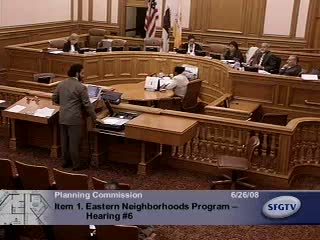
Commission considers CU requirement for post‑secondary institutions; public warns on CEQA streamlining
Summary
Staff proposed requiring conditional-use permits for post‑secondary institutions in mixed‑use districts and commissioners stressed institutional master plans; community groups warned that program-level CEQA streamlining in the plan could curtail public review.
Planning staff recommended that post‑secondary institutions (colleges, universities and similar institutions) be treated differently from other educational uses in mixed‑use districts by requiring a conditional-use permit (CU) before they locate there. Steve Wertheim explained that while educational uses are generally permitted in mixed‑use districts, ‘‘the subset that is post secondary institutions…some additional scrutiny is necessary’’ because community groups had raised concerns about certain institutions moving into neighborhoods.
Commissioners emphasized the role of institutional master plans. One commissioner said it would be important to ‘‘codify the issue about institutional master plans for post secondary as well because…even the CU does not prevent growth unless we really have a clear institutional master plan to know what these institutions are trying to do.’’ Staff confirmed the code already requires an institutional master plan on record and stated that major changes require updated plans and a waiting period before permits can be issued.
Community speakers raised a related but distinct concern about environmental review. Diana Wu (Asian Neighborhood Design) asked the commission to preserve environmental-impact review procedures and warned that certain plan language could ‘‘gut the environmental review process’’ by enabling excessive streamlining of programmatic CEQA review and limiting opportunities for community input on projects. Planning staff replied that the program EIR may provide streamlining for projects that conform to the plan but that projects exceeding programmatic assumptions would still require project-level CEQA review.
The commission gave direction to require CUs for post‑secondary institutions and asked staff to return with clear code language and an explanation of the master-plan and CEQA implications.