Get Full Government Meeting Transcripts, Videos, & Alerts Forever!
Get email alerts on the Zoning Use Status topic
No spam. Unsubscribe anytime.
Neighbors appeal zoning finding that Masonic Auditorium is lawful assembly/entertainment use; Board keeps issue open
Summary
Dozens of neighbors and groups challenged a Zoning Administrator letter finding that the Masonic Auditorium (1111 California St) is a lawful nonconforming assembly and entertainment use; the Board heard extensive historic, zoning and impact testimony and continued the matter to Jan. 13 for final deliberation by the full panel.
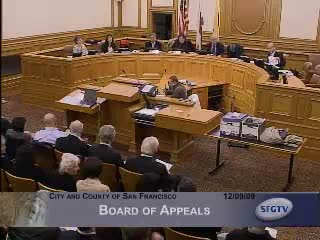
A large public hearing on Dec. 9 drew hundreds of residents, community leaders and representatives after a Zoning Administrator letter of determination concluded that the California Masonic Memorial Temple at 1111 California Street had the legal status of a nonconforming assembly/entertainment use. The letter outlined the building’s entitlement history and the administrative paths available to continue or intensify its assembly use; neighbors and several community organizations appealed that determination.
Planning Department staff summarized permit and rezoning history dating to the 1950s and said the structure’s original permit, subsequent building permits, and continuous history of outside rentals supported the zoning administrator’s conclusion. “The department believes…that the subject property is in fact a nonconforming use,” Planning Department counsel Scott Sanchez told the Board, noting that a separate conditional-use application is already scheduled before the Planning Commission on Jan. 14.
Opponents — including the Nob Hill Legal Coalition, neighbors, Grace Cathedral, and adjacent hotels — argued that the building was authorized as a Masonic temple and that large commercial entertainment operations would be an intensification that changed the character of a residential neighborhood. Counsel for the appellants, Alice Barclay, told the Board the original plans and recorded stipulations showed the property was intended as a memorial temple and that extensive entertainment use over time did not convert the building into a broadly permitted commercial venue.
The Masonic Center’s attorney, Steve Vettel, and supporters — including arts and hotel representatives, unions and promoters — argued the auditorium has for decades hosted concerts, graduations and conventions and that sustaining the venue supports the city’s cultural and convention economy. Vettel urged the Board to accept the Zoning Administrator’s historical analysis and leave any proposed modernization or intensification to the Planning Commission’s conditional‑use review.
Hundreds of residents also spoke during a long public-comment period with strongly divided views; concerns focused on public-safety, traffic, late-night activity, and the scale of proposed Live Nation-style programming versus the venue’s historical uses. After extended deliberations and a close preliminary vote, the Board decided to continue the matter to Jan. 13 so the full panel (including an absent commissioner) could review the record and tape and make a final decision.
What happens next: the Board will reconvene on Jan. 13 with a full panel; in parallel the Planning Commission will consider the Masonic Center’s conditional-use filing on Jan. 14. Any decisions about intensification, conditions on future events, loading and on‑street impacts would be addressed through the Planning Commission conditional-use process or other enforcement actions as appropriate.