Get Full Government Meeting Transcripts, Videos, & Alerts Forever!
Get email alerts on the PDR Vs Residential topic
No spam. Unsubscribe anytime.
Residents urge mixed housing in PDR areas; business and PDR advocates warn of displacement
Summary
Neighborhood groups urged allowing controlled residential uses inside PDR areas to add "feet on the street" and support local businesses; industry and PDR advocates warned rezoning could create nonconforming businesses and displace longtime workers and small manufacturers.
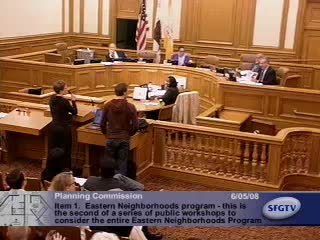
A coalition of neighborhood residents and local advocates told the Planning Commission they support mixed uses in former industrial blocks and asked staff to preserve working businesses while enabling more housing that would bring daytime activity to PDR corridors.
Representatives of the Northeast Mission Residents Association — Kate Sophus, David Maltz and Jaime Guerrero — said their neighborhood currently contains a mixture of small production and craft businesses, artists and longtime residents and that allowing controlled residential development in PDR blocks would improve street life and safety. Sophus described a Sixteenth Street case study where residents and small businesses collaborated to clean and stabilize a block, and the group asked the commission to consider UMU mapping for the area or a controlled approach to permitting residential in PDR1 to retain PDR jobs while adding families and day‑time users.
Speakers representing small businesses and PDR interests urged caution. Dennis Wagner of Rainbow Grocery Cooperative and other business owners noted that some parcels newly mapped as PDR host long‑standing neighborhood businesses and that converting or over‑zoning these blocks could render existing operations nonconforming, jeopardizing jobs. Several speakers asked staff to clarify the nonconforming‑use rules and how adaptive reuse would be handled so that viable PDR and service businesses are protected.
Why it matters: the PDR/residential balance is the central neighborhood tradeoff in the Eastern Neighborhoods rezoning. Residents argued that limited, thoughtful residential infill would reduce nighttime desertion of PDR corridors and improve safety and retail viability. Business owners responded that permitting housing too freely risks displacing lower‑margin production uses and harming local employment.
What’s next: staff told the commission they will return with a detailed explanation of nonconforming uses and implementation mechanics at the next zoning hearing and will work with neighborhood groups to refine UMU boundaries and protections for PDR businesses.